
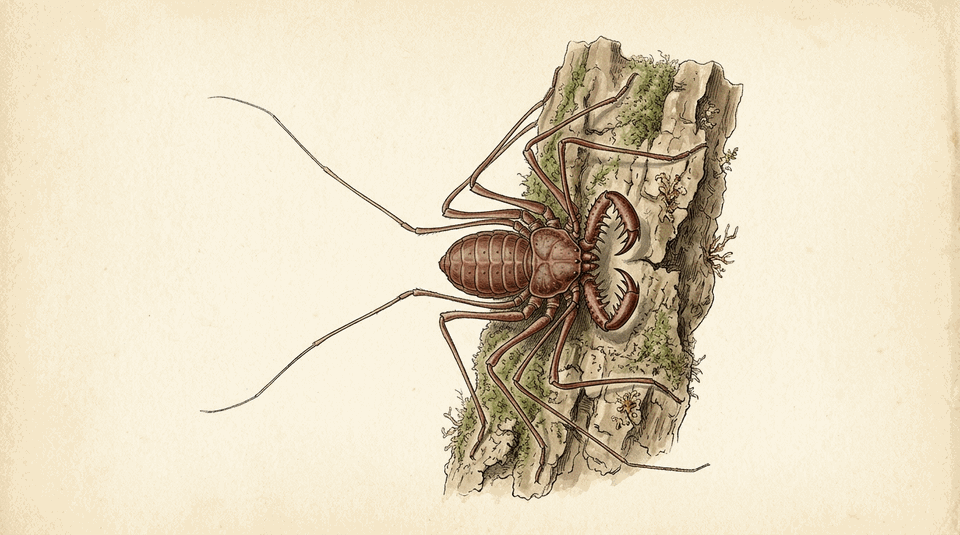
Asian Forest Scorpion
Heterometrus longimanus
1. Habitat Layout & Temperature Gradient
Species: Heterometrus longimanus | Difficulty: 2/5 — Easy | Hardiness: 4/5 — Hardy

Critter Cabana & Gresham Pet Supply — Keeping Your Pet Healthy & Thriving
At a Glance

| Common Name | Asian Forest Scorpion |
| Species | Heterometrus longimanus |
| Origin | Tropical rainforests of Southeast Asia |
| Adult Size | 4–6 inches long |
| Lifespan | 5–8 years |
| Diet Type | Insectivore (Crickets, Roaches, Mealworms) |
| Activity | Nocturnal (Spends most of the day hiding in deep burrows) |
| Temperament | Shy and fossorial. More defensive and skittish than the Emperor Scorpion. |
| Handleability | Not recommended. They are prone to pinching and stinging when stressed. |
| Venom | Medically insignificant (Comparable to a bee sting, unless allergic), but the sting is painful. |
| Defense | They have massive, powerful claws (pedipalps) and prefer to pinch threats rather than sting them. |
| Difficulty | 2/5 — Easy (Straightforward care, but they require high humidity) |
| Hardiness | 4/5 — Hardy (Robust, provided they don't dry out) |
Why We Love Them: Asian Forest Scorpions are visually striking, glossy black giants. When placed under a UV blacklight, their entire exoskeleton glows a brilliant, neon cyan-green! While they are often confused with Emperor Scorpions, Asian Forest Scorpions have slightly smoother, glossier claws and tend to be a bit more defensive.
Safety Information
Venom/Defense: Their venom is mild, but a sting will still cause localized pain, swelling, and redness. Because their claws are so massive, they actually prefer to use brute force to defend themselves. A pinch from an adult Asian Forest Scorpion is incredibly strong and can easily break the skin.
Handling Precautions: Do not handle this species. Handling causes them immense stress and puts you at risk of a painful pinch or sting. Always use long (10-inch or 12-inch) feeding tongs when performing tank maintenance.

No Cohabitation: Unlike Emperor Scorpions, Asian Forest Scorpions are highly territorial. Do not house them together. Keeping multiple in the same tank will inevitably lead to cannibalism.
Housing & Enclosure
Enclosure Type & Size
- Type: Terrestrial / Heavy Burrower (Fossorial).
- Minimum: A standard 10-gallon glass aquarium is perfect for a single adult.
- Ventilation: Good ventilation is required to prevent mold in their high-humidity environment, so a screen lid is recommended.
Substrate
- Recommended: Coconut fiber (Eco Earth), peat moss, or a jungle soil mix.
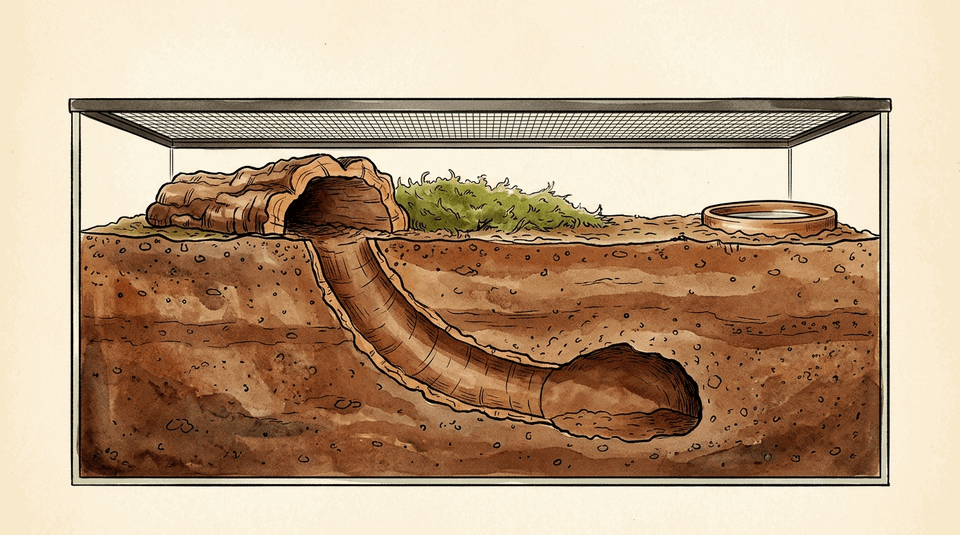
- Depth (CRITICAL): Provide 3 to 6 inches of substrate. These scorpions are fossorial, meaning they need to dig deep, elaborate burrows to feel secure and regulate their temperature/humidity.
Décor & Enrichment
- Hides: Provide multiple hides (curved cork bark, flat rocks, or half-logs). They will often use a piece of cork bark as the "roof" for their burrow entrance.
- Leaf Litter: Adding a layer of magnolia or oak leaf litter on top of the soil helps trap moisture and mimics their natural forest floor habitat.
- Water Dish: Provide a wide, shallow water dish. Keep it filled with fresh water at all times. Do not put sponges in the water.
Temperature
| Zone | Temperature |
|---|---|
| Ambient | 72–85°F (22–29°C) |
- Heating: They do best in a warm environment. If your house drops below 72°F, you must use a heat pad. CRITICAL: Mount the heat pad on the SIDE of the tank, never underneath. In the wild, scorpions dig deeper into the earth to escape the heat. If the heat pad is on the bottom, they will dig down, get trapped against the glass, and cook to death.
Humidity
- Target Range: 70–82% (High).
- How to Maintain: Because they are from the rainforest, they need high humidity to survive and molt properly. Keep the substrate consistently damp (it should clump together when squeezed, but not drip water). You can achieve this by pouring water directly into the corners of the soil, rather than just surface misting.
Diet & Nutrition

Asian Forest Scorpions are great eaters. They often wait at the entrance of their burrow and ambush passing prey.
Primary Diet
- Live crickets, dubia roaches, or mealworms. Ensure the prey is appropriately sized.
Feeding Schedule
| Life Stage | Frequency | Prey Size |
|---|---|---|
| Juvenile | Every 3–5 days | Small/Medium crickets |
| Adult | Every 7–10 days | 2-3 Large crickets or 1 Large Roach |
Pre-Molt Fasting
- If they seal themselves inside their burrow and refuse food for weeks, they are likely preparing to molt. Do not dig them up.
Molting
During the Molt
- Like tarantulas, scorpions must shed their hard exoskeleton to grow.
- DO NOT disturb the scorpion while it is molting.
- Remove any live crickets from the enclosure immediately. A live cricket will eat a molting scorpion alive while its new shell is soft.
What We Stock & Use in Our Stores
These are products we carry and recommend for this species. Ask any associate for help finding them in-store.
| Category | Product | Notes |
|---|---|---|
| Enclosure | Aqueon 10-Gallon Glass Aquarium | Perfect size for one adult |
| Substrate | Zoo Med Eco Earth (Coco Fiber) | Minimum 3-6 inches deep for burrowing |
| Heating | Zoo Med ReptiTherm UTH (Small) | MUST be mounted on the side of the tank, not the bottom |
| Hides | Zoo Med Natural Cork Bark | Excellent starting point for their burrows |
| Tools | Zoo Med 10-inch Feeding Tongs | Mandatory to avoid being pinched or stung |
Care sheet compiled by Critter Cabana & Gresham Pet Supply. For questions, ask any livestock specialist in-store.
Last updated: 2026-08-04
How We Keep Them at Critter Cabana & Gresham Pet Supply
- Oregon Winter Furnace Air vs. Molting Humidity: When Pacific Northwest furnaces kick on from October through April, indoor room humidity drops fast and dries out small enclosures from the top down. Rather than misting the spider or invert directly (which stresses terrestrial species and invites stagnant mold), we keep Asian Forest Scorpion at
70-82% (High)by using a deep moisture-retaining substrate bed (ReptiSoil + Coco Fiber + Sphagnum Moss), overflowing the water dish slightly into one corner, and maintaining cross-ventilation. - Safe Room Heating in the Willamette Valley: If your house drops below 65°F on winter nights, never stick a heat pad on the bottom of a burrowing invertebrate tank—they dig down to escape heat and will cook themselves. Use a low-wattage side-mounted heat mat on a digital thermostat or warm the room ambiently to
species-appropriate warm zone. - Stocked at Newberg & Gresham: At Critter Cabana (Newberg) and Gresham Pet Supply, we stock acrylic and glass invertebrate enclosures, cork bark flats and tubes, bioactive substrates, flightless fruit flies (D. melanogaster and D. hydei), pinhead to adult crickets, dubia roaches, and live Temperate White Springtail and Isopod cultures.
Common Questions (FAQ)
How do I keep my Asian Forest Scorpion warm and humid enough during an Oregon winter?
Target species-appropriate warm zone and 70-82% (High). When Oregon winter furnaces dry out the air, use a deep 3–5 inch substrate mix of Zoo Med ReptiSoil and coco fiber, keep a shallow water dish filled, and dampen one corner of the substrate rather than misting the animal directly. Never put a heat mat underneath a burrowing invertebrate enclosure.
What size enclosure does a Asian Forest Scorpion need?
An adult Asian Forest Scorpion thrives in 10-Gallon Tank with secure ventilation. For terrestrial tarantulas and scorpions, floor space and deep substrate matter most (keep open fall height low so heavy-bodied species cannot rupture their abdomen); for arboreal species, prioritize vertical cork bark tubes and cross-ventilation.
Can I put isopods in a Asian Forest Scorpion bioactive enclosure?
Around molting tarantulas and scorpions, skip protein-hungry large isopods and stick to Temperate White Springtails (or gentle Dwarf White isopods in humid detritivore setups) so a soft, newly molted animal is never nibbled.
Where can I find Asian Forest Scorpion, cork bark, and feeder insects in Oregon?
We stock live invertebrates, tarantulas, jumping spiders, cork bark flats and tubes, bioactive substrates, and gut-loaded feeder insects at our two exotic animal stores: Critter Cabana in Newberg (514 E First St, 503-537-2887) and Gresham Pet Supply (2185 NW Burnside Rd, 503-665-7606).