
Domestic Rat
Rattus norvegicus
1. Multi-Tier Wire Cage, Hammocks & Airflow Setup

2. Two Great Ways to Set Up Your Habitat
Enclosure: Multi-Tier Wire Cage (1/2" Bar Spacing) vs. Glass Aquariums
Critical Respiratory Rule: Rats carry natural respiratory flora that flares up instantly if ammonia builds up in stagnant air:
Option A: Midwest Critter Nation or Multi-Tier Powder-Coated Cage (Our Top Pick!)
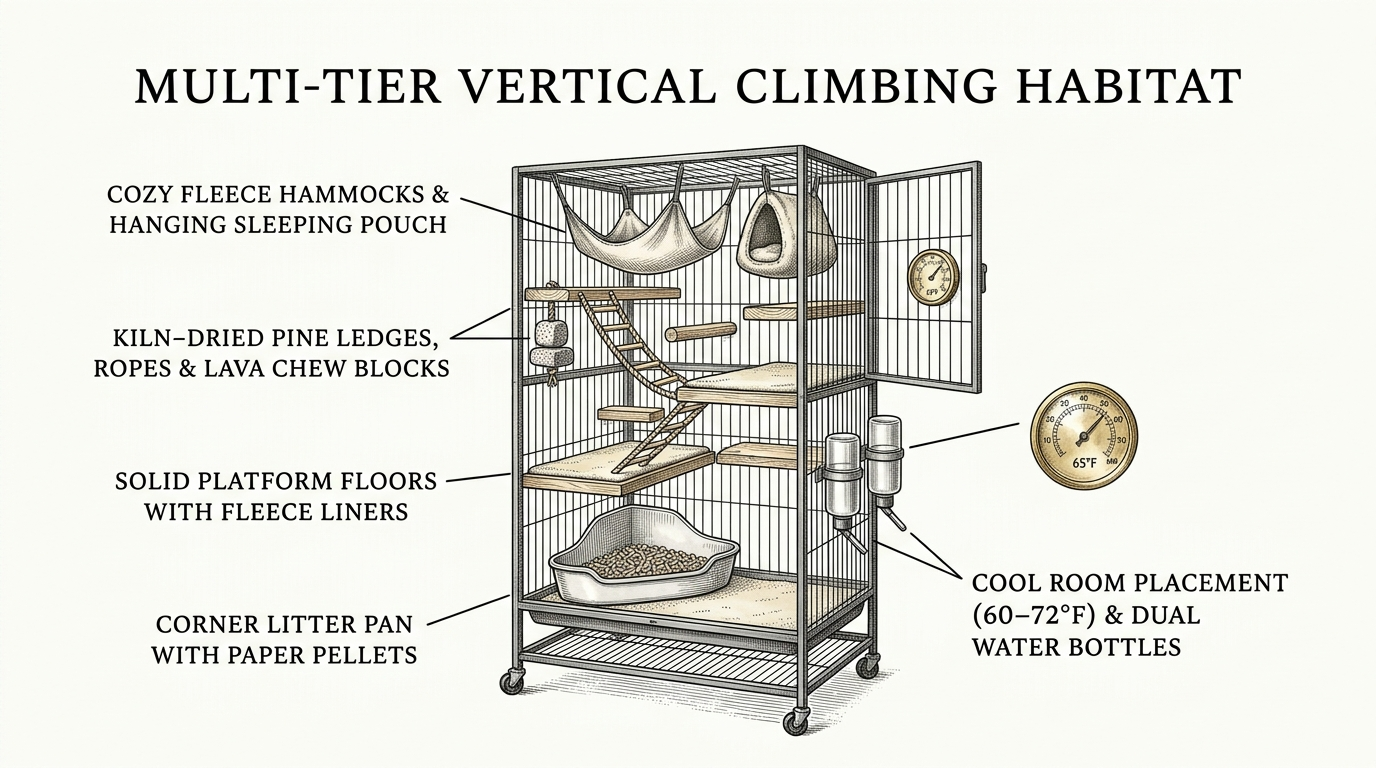
Full-width front doors, 1/2" horizontal bar spacing for climbing (even babies and petite females can't squeeze through 1/2" bars!), and 360° cross-ventilation.
Option B: Solid Platforms & Covered Ramps (Prevent Bumblefoot!)
Never leave bare wire mesh floors or wire-rung ramps exposed—clip washable fleece liners or plastic tray covers over shelves so toes and heels stay safe.
Cluttered Canopy: Hammocks, Sputniks & Corner Litter Pans
Rats love sleeping piled on top of each other high up in the cage canopy:
Option A: Fleece Double-Decker Hammocks, Rope Bridges & Lava Ledges
Pack the upper half of the cage with washable fleece hammocks, hanging cubes, thick cotton climbing ropes, and pumice lava ledges (which trim nails as they climb!).
Option B: Corner Litter Pan + Dig Box Enrichment
Rats easily learn to poop in a corner litter pan filled with paper pellets—just place a smooth river rock ('pee rock') in the middle of the pan!
Same-Sex Pairs: Cuddly Males vs. Energetic Females
A single rat kept alone becomes depressed, fearful, and prone to illness—two rats are no more work than one:
Option A: Pair or Trio of Brothers (The Ultimate Lap Potatoes)
Adult male rats grow larger, mellow out into total couch potatoes, and love snoozing in your hoodie pocket while getting ear scratches.
Option B: Pair or Trio of Sisters (Acrobatic Trick Learners)
Females stay smaller, smell slightly less musky, and love learning agility tricks, pea-fishing in a shallow water dish, and exploring mazes!

3. Complete Lab Block Diet + Healthy Table-Food Treats
Favorite Rat Foraging Games & Foods to Avoid:
Hide cheerios/seeds inside folded toilet paper tubes or puzzle toys
Red crust around nose/eyes isn't blood—it's porphyrin, a sign of stress or URI!
Thick peanut butter can choke a rat (they cannot gag or vomit!)
Raw dry beans, green potato skin, onion, citrus peel (for males), or carbonated drinks

4. Four Keys to a Happy, Thriving Domestic Rat
Listen for Sneezes & Clicks
Hold your rat up to your ear ('rat phone')! Healthy breathing is completely silent. If you hear honking, clicking, or persistent sneezing, see an exotic vet early for antibiotics.
Never Lift by the Tail!
A rat's tail skin can strip off ('deglove') if grabbed! Always scoop rats up with two hands supporting their chest and back feet.
Zero Scented Candles or Pine
Because rats live close to the bedding, skip scented room sprays, incense, cedar, and dusty litters. Wash fleece hammocks every 3–4 days with fragrance-free detergent.
12–16" Wheel If You Use One
Most rats prefer climbing and free-roam play over wheels—if you do offer a wheel, it must be a huge 14–16" solid wheel so their long tail and spine never curve.

Bring-Home Shopping Checklist
Tap items to check them off on your phone while you shop at Critter Cabana.
Multi-Tier Wire Cage & Bedding
Climbing, Chews & Foraging
Nutrition & Hydration
Complete Reference Notes & Oregon Keeping Guide
Species: Rattus norvegicus | Difficulty: 1/5 — Beginner | Hardiness: 4/5 — Hardy
Critter Cabana & Gresham Pet Supply — Keeping Your Pet Healthy & Thriving
At a Glance
| Common Name | Domestic Rat, Fancy Rat |
| Species | Rattus norvegicus |
| Origin | Domesticated from the wild Brown Rat |
| Adult Size | 9 to 11 inches (plus a 7-9 inch tail) |
| Lifespan | 2 to 3 years |
| Diet Type | Omnivore (Pelleted blocks, fresh vegetables, fruit) |
| Activity | Crepuscular/Nocturnal (Most active at dawn and dusk, but adapt to your schedule) |
| Temperament | Often described as "tiny dogs." They are incredibly smart, learn their names, and love to cuddle with their owners. |
| Handleability | Excellent. Rats rarely bite unless in extreme pain or fear, making them fantastic pets for children (with supervision). |
| Difficulty | 1/5 — Beginner (Exceptional starter pets) |
| Hardiness | 4/5 — Hardy (Though prone to respiratory infections in old age) |
Why We Love Them: If you can get past the stigma of the tail, Rats are arguably the best small pets available. They are far more intelligent and affectionate than hamsters or guinea pigs. They love shoulder rides, can be taught complex tricks, and form deep, emotional bonds with their humans.
The Social Rule (Never Keep One Alone)

RAT PACKS: You must keep rats in at least a same-sex pair. They are highly social pack animals that groom each other, sleep in "cuddle puddles," and play constantly. A single rat will become severely depressed, lethargic, and stressed. Buy them in pairs from the start.
Housing & Enclosure
Cage Size & Setup
- Minimum Size: A large, multi-level wire cage (minimum 24" x 24" x 24" for a pair). They love to climb the bars.
- Solid Bottoms Only: Wire floors will cause painful foot sores called "bumblefoot." The cage floor and ramps must be solid plastic or covered in fleece.
- Bar Spacing: 1/2 inch spacing is required for females and young rats; adult males can usually be kept in cages with 1-inch spacing.
Bedding & Substrate
- Safe: Dust-free paper bedding (CareFresh), aspen shavings, or washable fleece liners.
- Dangerous: NEVER use cedar or pine shavings. The aromatic oils in these woods will cause fatal respiratory infections.
Enrichment
- Rats are brilliant and need mental stimulation. Provide plenty of hanging hammocks, ropes, wooden chew toys, and PVC pipes for tunnels. They also love solid-surface exercise wheels (must be at least 12 inches to prevent spine damage).
Diet & Nutrition
The Daily Diet Breakdown
- 80% Lab Blocks: A high-quality, uniform pelleted block (like Oxbow Essentials Adult Rat or Mazuri) prevents them from picking out the tasty, fatty seeds and leaving the healthy parts behind.
- 20% Fresh Foods: Offer daily "salads" of cooked pasta, peas, broccoli, carrots, and small pieces of fruit.
- Treats: Yogurt drops or seeds should be used sparingly as training rewards.
Toxic Foods to Avoid
- Sticky foods (like chunky peanut butter) can cause choking.
- Citrus skin/juice (especially for male rats, as it can cause kidney damage).
- Raw beans, raw sweet potato, and green bananas.
Care & Maintenance
Out-of-Cage Time
- Rats need at least 1 hour of supervised free-roam time daily. Create a "rat-safe" zone (watch out for electrical cords!) or let them hang out on the couch with you.
Health (The Respiratory Warning)
- Rats have very sensitive respiratory systems. Keep their cage meticulously clean to prevent ammonia buildup from urine. If your rat starts making a "cooing" or "sneezing" sound, or has red discharge around the eyes/nose (porphyrin), see an exotic vet immediately.
What We Stock & Use in Our Stores
These are products we carry and recommend for this species. Ask any associate for help finding them in-store.
| Category | Product | Notes |
|---|---|---|
| Diet | Oxbow Essentials Adult Rat | Uniform block prevents selective eating |
| Housing | MidWest Critter Nation (Single Unit) | The gold standard for pet rat cages |
| Bedding | CareFresh Paper Bedding | 99% dust-free to protect their lungs |
| Enrichment | Marshall Ferret Hammocks | Rats love sleeping in hanging hammocks |
Care sheet compiled by Critter Cabana & Gresham Pet Supply. For questions, ask any livestock specialist in-store.
Last updated: 2026-08-04
How We Keep Them at Critter Cabana & Gresham Pet Supply
- Pacific Northwest Seasonal Drafts & Indoor Air Quality: In Oregon, damp chilly winters and sudden August heatwaves are the two biggest environmental stressors for Domestic Rat. Keep their habitat (
24x24x24 Wire Cage (Solid Bottom)) away from drafty windows, exterior doors, and direct furnace vents, and maintain a steady65-75°Ftemperature zone. - What Our Store Crew Uses Daily: In our Newberg and Gresham animal rooms, we use dust-extracted, scent-free bedding (never cedar or raw phenols), fresh Pacific Northwest grass hays or species-specific pelleted staples (Oxbow, Harrison's, Roudybush, or Higgins), and daily foraging enrichment so young animals are already hand-accustomed and eating a balanced diet before they go home with you.
- Local Exotic Vet Planning: Before an emergency ever happens, save the number of an experienced Oregon avian/exotic veterinarian in the Portland Metro or Willamette Valley area (such as Avian & Exotic Veterinary Care or Scales & Tails Exotic Pet Clinic).
Common Questions (FAQ)
What size cage or habitat does a Domestic Rat actually need?
Plan on at least 24x24x24 Wire Cage (Solid Bottom) as a true minimum—bigger horizontal floor space (or flight width for birds) is always better for daily exercise, mental health, and clean air quality.
How do I keep Domestic Rat comfortable through Oregon winters and summers?
Keep indoor temperatures steady around 65-75°F with Moderate humidity, well away from cold window drafts in winter and direct afternoon sun in summer.
What do you feed Domestic Rat at Critter Cabana and Gresham Pet Supply?
Our store crew feeds a balanced omnivore regimen built on high-quality pellets/hay and daily fresh produce or foraging items—never all-seed junk mixes that cause vitamin deficiencies and fatty liver disease.
Where can I meet Domestic Rat and talk to the animal care crew in Oregon?
Visit our live animal departments at Critter Cabana in Newberg (514 E First St, 503-537-2887) or Gresham Pet Supply (2185 NW Burnside Rd, 503-665-7606) to meet our animals and get hands-on setup advice.