
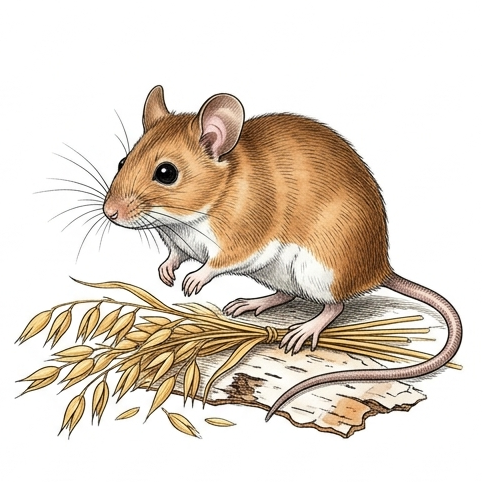
Domestic Mouse
Mus musculus
1. Cluttered Glass Terrarium, Deep Bedding & Climbing Branches
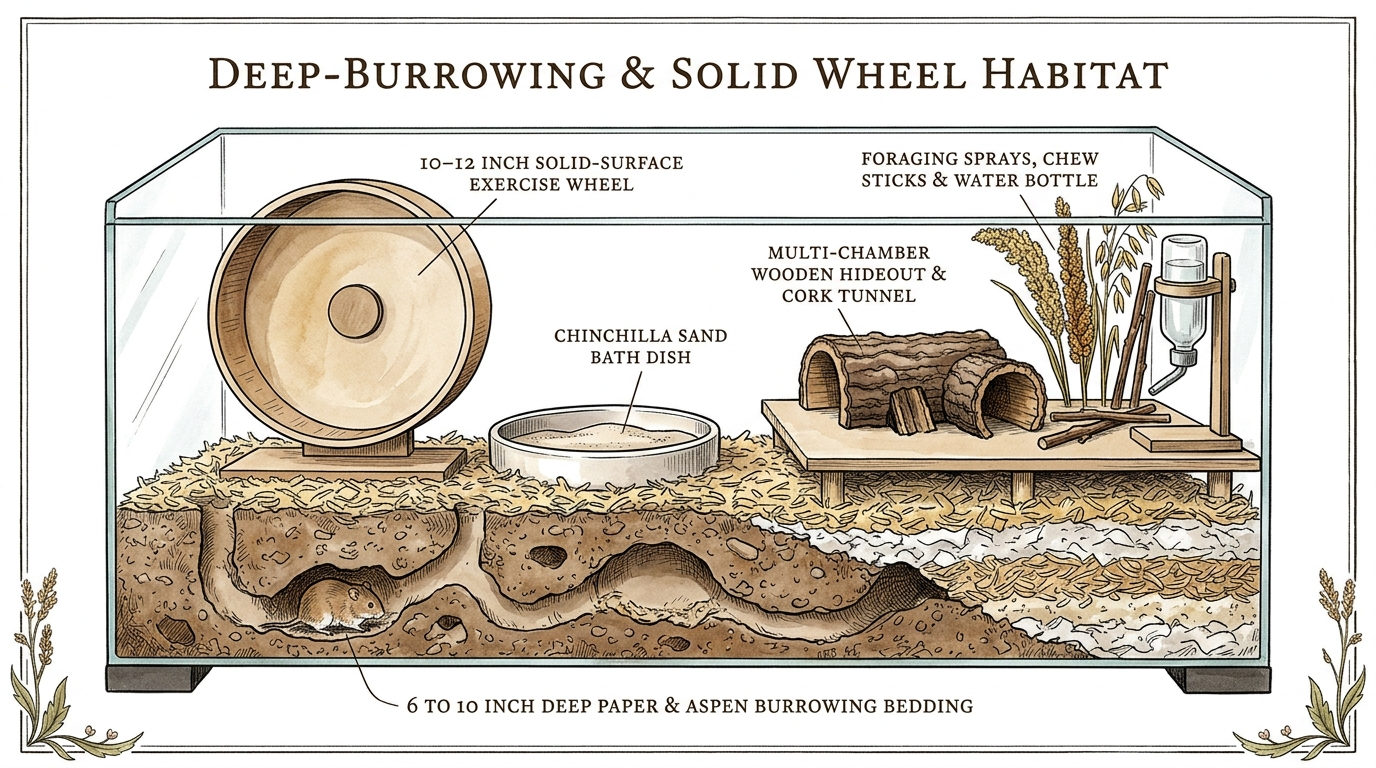

2. Two Great Ways to Set Up Your Habitat
Social Choice: Trio of Sisters (Does) vs. Solo Male (Buck)
Understanding mouse social biology makes choosing your setup easy:
Option A: Trio of 2–4 Female Mice (Active Community Builders!)
Female mice are super social, have very mild odor, and spend all evening grooming each other and sleeping in a warm cuddle pile inside their nest box.
Option B: Single Male Mouse (Affectionate Solo Companion)
Intact adult male mice will fight fiercely with other males—so keep 1 male per tank! Solo males bond closely with their human and love daily hand-time and extra foraging toys.
Enclosure & Odor-Smart Bedding Blend
Because mice have fast metabolisms, the right bedding and cleaning routine keeps their tank smelling fresh:
Option A: 20-Gallon Long Glass Tank + Locking Screen Top
Most wire hamster cages have 3/8" or 1/2" bar spacing that a mouse can walk right through! A 20-Gallon Long tank holds 4–6" of bedding and is 100% escape-proof.
Option B: 50% Kiln-Dried Aspen + 50% Paper Bedding + Nesting Tissue
Kiln-dried aspen neutralizes mouse urine ammonia far better than paper alone, while Carefresh paper and shredded toilet paper let them weave cozy spherical nests!
Organized Clutter & 8–10" Tail-Safe Wheel
Open empty space makes mice feel exposed to hawks—they are happiest when their tank looks like a miniature jungle gym:
Option A: Egg Cartons, Toilet Paper Tubes, Rope Vines & Wood Bridges
Hang sisal/cotton ropes from the screen lid and stack clean cardboard egg cartons and birch tunnels below—replacing chewed cardboard weekly also helps control scent!
Option B: 8" to 10" Upright Solid Wheel
Skip tiny 5" mouse wheels—they force a mouse's long tail to curl upward over its back ('wheel tail'). An 8–10" solid wheel keeps their spine and tail straight.

3. High-Energy Omnivore Diet & Scatter Feeding
Mouse Handling & Odor Control Tips:
When cleaning, leave 1 handful of clean old bedding so they don't over-mark!
Wipe wheel daily; swap out peed-on cardboard tubes every week
Never pick up by the tail tip—scoop in a cardboard tube or both hands
Citrus, onion, garlic, chocolate, raw beans, or sticky peanut butter

4. Four Keys to a Happy, Thriving Domestic Mouse
Never Lift by the Tail
Just like rats and gerbils, grabbing a mouse by its tail can injure its spine or strip the tail skin. Let them walk onto your sleeve or into a paper cup!
Watch for Itchy Ears / Mites
If a mouse scratches its ears or neck raw, first check that its diet isn't overloaded with fatty sunflower seeds/peanuts, and have an exotic vet check for mites.
Keep Tank Away from Drafts
Mice weigh only 25–40 grams and lose body heat fast. Keep their tank at 65°–75°F with plenty of shredded paper nesting material.
Use Heavy Screen Clips
Mice are surprisingly strong vertical jumpers and can climb up water bottle spouts—always secure the tank screen lid with metal clips!

Bring-Home Shopping Checklist
Tap items to check them off on your phone while you shop at Critter Cabana.
Escape-Proof Tank & Bedding
Wheel, Ropes & Foraging
Food & Hydration
Complete Reference Notes & Oregon Keeping Guide
Species: Mus musculus (Fancy Mouse) | Difficulty: 1/5 — Beginner | Hardiness: 3/5 — Moderate
Critter Cabana & Gresham Pet Supply — Keeping Your Pet Healthy & Thriving
At a Glance
| Common Name | Domestic Mouse, Fancy Mouse |
| Species | Mus musculus |
| Origin | Domesticated worldwide |
| Adult Size | 3 to 4 inches (plus tail) |
| Lifespan | 1.5 to 3 years |
| Diet Type | Omnivore (Rodent blocks, vegetables) |
| Activity | Nocturnal / Crepuscular (Highly active at night) |
| Temperament | Very active, curious, and fun to watch, but naturally skittish. |
| Handleability | Moderate. They can be tamed with patience, but they are very fast and fragile. Never pick them up by the tail. |
| Difficulty | 1/5 — Beginner (Great observation pets) |
| Hardiness | 3/5 — Moderate (Prone to respiratory issues and tumors) |
Why We Love Them: Fancy Mice are incredibly busy little creatures. They love to build elaborate nests, run on their wheels, and explore their environments. They come in beautiful coat colors and types (including satin, long-hair, and hairless) and are very entertaining to watch.
The Social Rule (Males vs. Females)
KNOW THE DIFFERENCE: You must house mice correctly based on their sex:
- FEMALES: Are highly social and must be kept in groups of at least two or three. A single female will become lonely and stressed.
- MALES: Are fiercely territorial and must be kept strictly alone. If you put two adult males in the same cage, they will almost certainly fight to the death. (Males also have a distinctly stronger, musky odor than females).
Housing & Enclosure
Cage Size & Setup
- Minimum Size: A 10-gallon to 20-gallon long glass aquarium with a secure mesh screen lid, or a wire cage of similar dimensions (minimum 20" L x 10" W).
- Wire Cages: If using a wire cage, the bar spacing must be 1/4 inch or less. Mice are escape artists and can squeeze through impossibly small gaps. The cage must have a solid bottom to protect their feet.
- Ventilation: Avoid plastic modular tube cages (like CritterTrails). They have terrible ventilation, which traps ammonia and causes deadly respiratory infections.
Bedding & Substrate
- Safe: Dust-free paper bedding (CareFresh) or aspen shavings. Provide at least 2-3 inches so they can burrow and build nests.
- Dangerous: NEVER use cedar or pine shavings. The aromatic oils are highly toxic to their respiratory systems.
Enrichment
- Mice need a solid-surface exercise wheel (minimum 6.5 inches). Avoid wire-rung wheels, which can catch their feet and tails, causing amputations. Provide plenty of cardboard tubes, wooden chew toys, and small hiding huts.
Diet & Nutrition
The Daily Diet Breakdown
- 80% Lab Blocks: A high-quality, uniform pelleted block (like Oxbow Essentials Mouse/Young Rat) provides complete nutrition. Avoid seed-heavy mixes, as mice will pick out the fatty sunflower seeds and leave the healthy bits, leading to obesity.
- 20% Fresh Foods: Offer tiny, bite-sized amounts of fresh vegetables (broccoli, carrots, peas) a few times a week.
- Water: Always provide fresh water via a small water bottle (bowls get buried in bedding immediately).
Care & Maintenance
Handling
- Always scoop a mouse up from underneath using both hands. Never pick a mouse up by the tip of its tail, as the skin can deglove (rip off), which requires veterinary amputation.
Cleaning
- Because mice urine contains high levels of ammonia, the cage must be spot-cleaned every few days and deep-cleaned weekly.
What We Stock & Use in Our Stores
These are products we carry and recommend for this species. Ask any associate for help finding them in-store.
| Category | Product | Notes |
|---|---|---|
| Diet | Oxbow Essentials Mouse & Young Rat | Complete, balanced pelleted block |
| Housing | Aqueon 20-Gallon Long Tank + Screen Lid | Secure housing with zero escape risk |
| Bedding | CareFresh Paper Bedding | 99% dust-free to protect their lungs |
| Enrichment | Exotic Nutrition Silent Runner (9-inch) | Safe, solid-surface wheel |
Care sheet compiled by Critter Cabana & Gresham Pet Supply. For questions, ask any livestock specialist in-store.
Last updated: 2026-08-04
How We Keep Them at Critter Cabana & Gresham Pet Supply
- Pacific Northwest Seasonal Drafts & Indoor Air Quality: In Oregon, damp chilly winters and sudden August heatwaves are the two biggest environmental stressors for Domestic Mouse. Keep their habitat (
10-20 Gallon Tank or Small Wire Cage) away from drafty windows, exterior doors, and direct furnace vents, and maintain a steady65-75°Ftemperature zone. - What Our Store Crew Uses Daily: In our Newberg and Gresham animal rooms, we use dust-extracted, scent-free bedding (never cedar or raw phenols), fresh Pacific Northwest grass hays or species-specific pelleted staples (Oxbow, Harrison's, Roudybush, or Higgins), and daily foraging enrichment so young animals are already hand-accustomed and eating a balanced diet before they go home with you.
- Local Exotic Vet Planning: Before an emergency ever happens, save the number of an experienced Oregon avian/exotic veterinarian in the Portland Metro or Willamette Valley area (such as Avian & Exotic Veterinary Care or Scales & Tails Exotic Pet Clinic).
Common Questions (FAQ)
What size cage or habitat does a Domestic Mouse actually need?
Plan on at least 10-20 Gallon Tank or Small Wire Cage as a true minimum—bigger horizontal floor space (or flight width for birds) is always better for daily exercise, mental health, and clean air quality.
How do I keep Domestic Mouse comfortable through Oregon winters and summers?
Keep indoor temperatures steady around 65-75°F with Moderate humidity, well away from cold window drafts in winter and direct afternoon sun in summer.
What do you feed Domestic Mouse at Critter Cabana and Gresham Pet Supply?
Our store crew feeds a balanced omnivore regimen built on high-quality pellets/hay and daily fresh produce or foraging items—never all-seed junk mixes that cause vitamin deficiencies and fatty liver disease.
Where can I meet Domestic Mouse and talk to the animal care crew in Oregon?
Visit our live animal departments at Critter Cabana in Newberg (514 E First St, 503-537-2887) or Gresham Pet Supply (2185 NW Burnside Rd, 503-665-7606) to meet our animals and get hands-on setup advice.