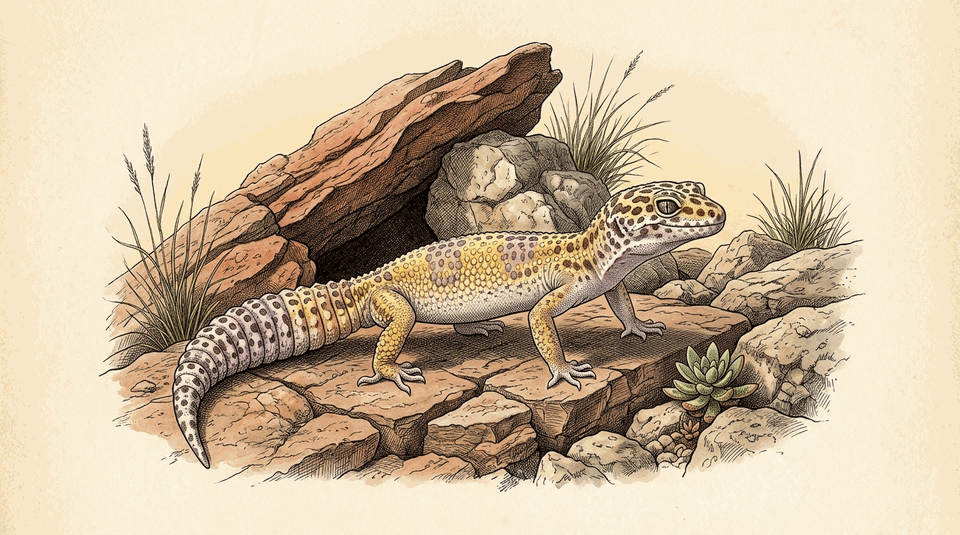
Leopard Gecko
Eublepharis macularius
1. Setting Up the Tank & Temps
2. Two Great Ways to Set Up Your Habitat
Heating: Under-Tank Heat Mat vs. Overhead Bulb
Short-and-sweet: either method works great as long as it's plugged into a digital thermostat:
Option A: Under-Tank Heat Mat + Digital Thermostat (Staff Pick)
Warms the floor right under the warm hide so they can digest bugs at night. Big rule: plug it into a digital thermostat set to 90–92°F!
Option B: Overhead Halogen Bulb or Deep Heat Projector
A 50W–75W halogen bulb or Deep Heat Projector warms a flat piece of slate and the air around it—awesome for glass terrariums.
Flooring: Solid Liner vs. Loose Soil Mix
Most 'impaction' horror stories actually come from cold temps or calcium sand—not good flooring:
Option A: Textured Liner, Slate Tile, or Paper Towel
Super easy to keep clean, works great with under-tank heat mats, and is our top pick for babies and first-time gecko keepers.
Option B: 70/30 Reptile Soil & Quartz Sand Mix
Once your gecko is an adult, 3–4" of packed Reptisoil + fine quartz sand lets them dig like they do in the wild (never use calcium sand!). Going bioactive? Seed with our Powder Orange / Blue (P. pruinosus) or Dalmatian / Orange (P. scaber) Isopods + Springtails under a damp cork flat!
UVB Light vs. Calcium + D3 Powder
Because Leopard Geckos mostly come out at dusk, you have two solid ways to give them Vitamin D3:
Option A: Low-Output Shade UVB Bar (5%–6% T5)
A gentle linear T5 Shade UVB tube lets them soak up UV naturally when they poke a leg or tail out of their hide during the day.
Option B: Dusting Bugs with Calcium + D3
No UVB light? No problem (especially for light-sensitive albinos)—just dust their bugs once a week with Calcium + D3 powder.
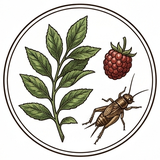
3. What & How Often to Feed (100% Live Bugs!)
Mix Up 2–3 of These Live Bugs So They Don't Get Picky:
Best lean staples—great for hunting
Easy to leave in a smooth dish
Juicy hydration treat after a shed
Gecko junk food—treat once a month max!

4. Four Keys to a Happy, Thriving Leopard Gecko
Check Toes After Shedding!
Geckos peel and eat their own shed skin overnight (weird, we know!). Always check their toes the next morning—if a tiny ring of dry skin is stuck, give a 10-minute warm 85°F soak and gently roll it off with a damp Q-tip.
Watch the Tail!
Give a new gecko a week to settle in before handling. Scoop from underneath and never grab their tail—if they think a predator has them, they'll drop their tail on the spot!
Tail Plumpness = Health
Your gecko's tail is their fat-storage pantry! You want the thickest part of the tail about as wide as their neck. If the tail gets skinny, legs look bendy, or eyes look crusty, check in with an exotic vet.
Ditch Colored Night Bulbs
Red and purple 'night bulbs' are an old myth—geckos can see that light plain as day and it messes up their sleep! Let the tank go completely dark at night; only use a lightless heat emitter if your room drops below 65°F.

Bring-Home Shopping Checklist
Tap items to check them off on your phone while you shop at Critter Cabana.
Habitat & Flooring
Heating, Thermostat & Gauges
Hides, Dishes & Supplements
Complete Reference Notes & Oregon Keeping Guide
Species: Eublepharis macularius | Difficulty: 1/5 — Beginner | Hardiness: 5/5 — Bulletproof
Critter Cabana & Gresham Pet Supply — Keeping Your Pet Healthy & Thriving
At a Glance
| Common Name | Leopard Gecko |
| Species | Eublepharis macularius |
| Origin | Arid grasslands and rocky deserts of Afghanistan, Pakistan, and Northwest India |
| Adult Size | 8–10 inches (20–25 cm); Giants/Super Giants can reach 11–12 inches |
| Weight | 45–80g (standard); 100–150g+ (Giant/Super Giant morphs) |
| Lifespan | 15–20 years (females); 20+ years possible (males). Record: 28+ years |
| Diet Type | Strict insectivore |
| Activity | Crepuscular (most active at dawn and dusk) |
| Temperament | Docile, calm, rarely bites. One of the most handleable reptiles |
| Handleability | Excellent — tolerates regular gentle handling. Avoid grabbing the tail (can drop via autotomy) |
| Difficulty | 1/5 — Beginner |
| Hardiness | 5/5 — Bulletproof |
Why We Love Them: Leopard geckos are the #1 recommended beginner reptile at Critter Cabana. They're hardy, handleable, long-lived, and come in an incredible variety of morphs. They don't require UVB (though it's beneficial), they don't need a massive enclosure, and they're one of the few geckos that can't climb glass — making escapes nearly impossible.
Habitat & Enclosure
Enclosure Size (Minimum)
- Juvenile (0–6 months): 10–20 gallon tank is acceptable temporarily. Larger is always better.
- Adult: 36" x 18" x 18" (90 x 45 x 45 cm) — a 40-gallon breeder tank or equivalent front-opening terrarium.
- Ideal: 36" x 18" x 18" front-opening terrarium. Front-opening enclosures reduce stress because you approach from the side, not from above (predator direction).
- Enclosure Recommendations: Exo Terra Glass Terrarium 36x18x18 or Zilla Front-Opening Terrarium (cross-ref: Reptile Enclosures)
Do NOT cohabitate leopard geckos. They are solitary animals. Housing them together leads to stress, bullying, competition for food, and injury — even if they "seem fine" for months. Females can sometimes coexist in very large enclosures, but we strongly advise against it.
Substrate
- Recommended:
- Paper towels (easiest, safest, best for juveniles and quarantine)
- Slate or ceramic tile (holds belly heat well, easy to clean, natural look)
- Reptile carpet (washable, no impaction risk)
- Topsoil/clay mix (70/30 organic topsoil to excavator clay) for naturalistic setups — adults only
- Avoid:
- Avoid: Calcium sand, play sand, vita-sand — impaction risk
- Avoid: Walnut shell — sharp edges, impaction risk
- Avoid: Gravel or pebbles — impaction risk
- Avoid: Wood shavings (cedar or pine) — toxic oils
Décor & Enrichment
- 3 hides minimum: Warm hide, cool hide, and humid/moist hide (critical for shedding)
- Humid hide: Plastic container with entry hole, lined with damp sphagnum moss or paper towels. Place on the warm side.
- Climbing opportunities: Cork bark, rock ledges, branches (they climb more than people think!)
- Foliage: Artificial plants for cover and visual barriers
- Dig box (optional): Container of organic topsoil for enrichment digging behavior
- (cross-ref: Reptile Décor, Hides & Caves)
Temperature
| Zone | Temperature |
|---|---|
| Basking Surface (warm hide floor) | 88–92°F (31–33°C) |
| Warm Side Ambient | 80–85°F (27–29°C) |
| Cool Side | 70–77°F (21–25°C) |
| Nighttime Drop | 65–72°F (18–22°C) — acceptable; do not let it drop below 60°F |
Critical: Always use a thermostat with any heating device. Unregulated heat sources can burn your gecko or overheat the enclosure. A digital thermometer with a probe (not stick-on dial gauges) is essential for accurate readings.
Heating Options
- Primary: Under-tank heater (UTH) on a thermostat — leopard geckos absorb belly heat for digestion. This is the traditional and effective method.
- Alternative: Deep heat projector (DHP) or ceramic heat emitter (CHE) — provides overhead infrared heat without visible light. Good for nighttime heating.
- Alternative: Halogen basking lamp — provides excellent infrared-A and infrared-B heat. Considered the gold standard for more naturalistic setups. Use with a dimming thermostat.
- Avoid: Red/blue "night" bulbs — they CAN see these colors and it disrupts their day/night cycle.
- Heating Recommendations: Zoo Med ReptiTherm UTH + Zoo Med ReptiTemp Digital Thermostat, or Exo Terra Ceramic Heat Emitter (cross-ref: Reptile Heating)
Lighting
- Photoperiod: 12 hours light / 12 hours dark (adjust seasonally if desired: 14/10 summer, 10/14 winter)
- UVB: Beneficial but not strictly required. Low-level UVB (shade-dweller level, Ferguson Zone 1) supports vitamin D3 synthesis, immune function, and natural behavior.
- UVB Recommendations: Zoo Med ReptiSun T5 HO 5.0 (mounted inside enclosure, 12–15 inches from basking area) or Arcadia ShadeDweller (cross-ref: UVB Lighting)
- If no UVB is provided: You MUST supplement with calcium + D3 (see Supplements below).
Humidity
- Ambient Target: 30–40% (they are arid species)
- Humid Hide: 70–80% inside the moist hide at all times
- How to Achieve: The humid hide with damp sphagnum moss is usually sufficient. Mist the humid hide when it dries out (every 1–2 days). Do NOT mist the entire enclosure — excess humidity causes respiratory infections.
Water
- Shallow water dish, refreshed daily. Place on the cool side.
- Leopard geckos drink from standing water (unlike many geckos that prefer droplets).
Diet & Nutrition
Primary Diet
Leopard geckos are strict insectivores — they eat only live insects. They do not eat plants, fruits, or vegetables.
- Staple feeders:
- Crickets — excellent nutrition, promotes natural hunting behavior
- Dubia Roaches — best overall feeder: high protein, low fat, low chitin, easy to gut-load
- Mealworms — convenient, good staple but higher in fat/chitin
Feeding Schedule
| Life Stage | Frequency | Amount |
|---|---|---|
| Juvenile (0–6 months) | Daily | 5–7 appropriately sized insects per feeding |
| Sub-adult (6–12 months) | Every other day | 5–8 insects per feeding |
| Adult (12+ months) | Every 2–4 days | 5–10 insects per feeding |
Prey Size Rule: Insects should be no longer than the width between the gecko's eyes. Oversized prey can cause choking or impaction.
Supplementary Foods (Variety & Treats)
- Black Soldier Fly Larvae (BSFL / Calciworms / NutriGrubs) — naturally high in calcium, excellent treat
- Waxworms — high fat, use sparingly as treats only (1–2 per week max; addictive!)
- Hornworms — high moisture, great for hydration; use as occasional treat
- Silkworms — excellent nutrition, softer body; great variety option
- Superworms — adults only, harder chitin; use occasionally
Supplements
| Supplement | Schedule |
|---|---|
| Calcium (no D3) | Dust feeder insects at EVERY feeding. Also provide a small dish of plain calcium powder in the enclosure 24/7 (leos will self-supplement). |
| Calcium (with D3) | Dust feeders 1–2x per week IF no UVB is provided. If UVB is provided, reduce to 1x per week. |
| Multivitamin | Dust feeders 1x per week (juveniles) or 1x every 2 weeks (adults). |
- Supplement Recommendations: Zoo Med Repti Calcium (with and without D3) + Zoo Med Reptivite Multivitamin or Fluker's Calcium with D3 (cross-ref: Reptile Supplements)
Gut-Loading: Feed your feeder insects a nutritious diet 24–48 hours before offering them to your gecko. Use gut-load products or fresh vegetables (carrots, squash, dark leafy greens). Healthy feeders = healthy gecko.
Foods to Avoid
- Avoid: Wild-caught insects — may carry pesticides or parasites
- Avoid: Fireflies / Lightning bugs — TOXIC, potentially fatal even in small amounts
- Avoid: Any plant matter — leopard geckos are obligate insectivores
- Avoid: Pinky mice — unnecessary for pet leos; too high in fat, can cause liver issues
- Avoid: Mealworm beetles — hard chitin, difficult to digest
- Avoid: Insects larger than the space between the gecko's eyes
Health & Husbandry
Common Health Issues
- Metabolic Bone Disease (MBD) — Symptoms: Soft/rubbery jaw, bowed legs, tremors, lethargy, difficulty walking, loss of appetite / Cause: Calcium and/or D3 deficiency, lack of UVB / Prevention: Consistent calcium + D3 supplementation, consider low-level UVB, proper gut-loading of feeders
- Stuck Shed (Dysecdysis) — Symptoms: Retained skin on toes, tail tip, or eyes; constriction bands that can cut off circulation / Cause: Inadequate humidity, no moist hide, dehydration, poor nutrition / Prevention: Maintain moist hide at all times, ensure proper hydration. If stuck shed occurs, soak gecko in lukewarm water for 15–20 minutes, then gently work skin off with a damp cotton swab. NEVER pull dry shed off.
- Cryptosporidiosis ("Crypto" / "Stick Tail Disease") — Symptoms: Extreme tail thinning ("stick tail"), chronic weight loss, regurgitation, diarrhea, lethargy / Cause: Protozoan parasite Cryptosporidium varanii / Prevention: Purchase from reputable breeders, quarantine all new animals for 60–90 days, strict hygiene. This disease is currently incurable and highly contagious. Isolate immediately if suspected.
- Impaction — Symptoms: Loss of appetite, bloated belly, constipation, lethargy / Cause: Ingestion of loose substrate (sand, gravel, walnut shell), oversized prey / Prevention: Use safe substrate (tile, paper towel, reptile carpet), appropriately sized prey, proper temperatures for digestion
- Respiratory Infection — Symptoms: Wheezing, bubbles from nose/mouth, open-mouth breathing, mucus, lethargy / Cause: Too-high humidity, cold temperatures, poor ventilation, stress / Prevention: Maintain ambient humidity at 30–40%, ensure proper temperature gradient, good ventilation
- Mouth Rot (Infectious Stomatitis) — Symptoms: Redness, swelling, or cheesy discharge around the mouth; appetite loss / Cause: Bacterial infection, often secondary to injury or stress / Prevention: Clean enclosure, proper humidity, avoid sharp cage furnishings
Signs of Good Health
- Alert, responsive, tongue-flicking to explore
- Bright, clear eyes (no cloudiness except during pre-shed)
- Plump, well-rounded tail (fat reserve indicator — should be roughly as wide as the neck)
- Clean, smooth skin with no stuck shed, lesions, or discoloration
- Regular appetite with enthusiastic feeding response
- Clean vent area (no caked feces or discharge)
- Active during dusk/evening hours; normal exploration behavior
Signs of Illness
- Red Flag: Thin or "stick" tail (sudden weight loss)
- Red Flag: Lethargic, unresponsive, not moving for extended periods
- Red Flag: Eyes closed during normally active hours; sunken eyes
- Red Flag: Refusal to eat for more than 2 weeks (outside of brumation/ovulation)
- Red Flag: Discharge from eyes, nostrils, or mouth
- Red Flag: Wheezing, open-mouth breathing, or clicking sounds
- Red Flag: Diarrhea, regurgitation, or blood in stool
- Red Flag: Retained shed on toes, tail, or eyes
- Red Flag: Lumps, bumps, or swelling anywhere on the body
Shedding
- Normal Cycle: Every 2–4 weeks (juveniles shed more frequently as they grow; adults every 4–8 weeks)
- Process: Skin turns pale/milky → gecko becomes less active → sheds in pieces and eats the shed skin (normal behavior — provides nutrients and removes scent from predators)
- Stuck Shed Protocol:
- Place gecko in a shallow container with lukewarm water (about 80°F) and a damp paper towel for 15–20 minutes
- Gently work retained skin off with a dampened cotton swab — focus on toes, tail tip, and around eyes
- NEVER pull dry shed — you will damage the new skin underneath
- Check toes carefully — retained shed can constrict blood flow and cause toe loss
Brumation
- Leopard geckos may enter a period of reduced activity (brumation) during winter months, even in captivity.
- Signs: Reduced appetite, sleeping more, spending more time in the cool hide.
- This is natural if temperatures drop slightly. Ensure water is always available.
- Brumation is NOT required for pet geckos. Maintain normal temperatures to avoid it.
Veterinary Needs
- We recommend an exotic-specialized veterinarian. Annual wellness checks are ideal.
- Fecal exams for parasites should be performed annually or if appetite/stool changes are observed.
- Quarantine all new geckos for 60–90 days before introducing them to a room with other reptiles.
Common Morphs
Morphs are color and pattern variations produced through selective breeding. They do not affect care requirements (with rare exceptions noted below). Leopard geckos have one of the largest morph markets in the reptile hobby.
- Normal (Wild Type) — Yellow body with black/brown spots and bands. The classic look. Hardy and affordable.
- High Yellow — Selectively bred for increased yellow pigmentation and reduced spotting. One of the earliest morphs.
- Tangerine — Bright orange body coloration, selectively bred for intensity. "Carrot Tail" variants have orange at the base of the tail.
- Mack Snow — Co-dominant gene producing a white/pale yellow base with black bands. Hatchlings are born black and white and develop yellow with age.
- Super Mack Snow — Homozygous Mack Snow. White body with bold black spotting. Very striking.
- Tremper Albino — Most common albino strain. Pink/lavender eyes, light yellow body with pink/brown spots. Reduced melanin.
- Bell Albino — Vibrant yellow body with distinctive pink eyes and light brown spots. Often considered the most visually striking albino strain.
- Rainwater Albino (Las Vegas Albino) — Paler, more pastel coloring. Slightly darker eyes than other albino strains.
- Blizzard — Patternless, solid-colored body (white, yellow, or gray). Simple recessive gene.
- RAPTOR — Red-eyed Albino Patternless Tremper Orange. Combination morph with solid red/ruby eyes and orange body. Very popular.
- Eclipse — Solid black or partially black eyes ("snake eyes" variant has half-solid eyes). Can be combined with many other morphs.
- Giant / Super Giant — Notably larger than standard leopard geckos (100–150g+). Requires slightly larger enclosure.
- Black Night — Premium line-bred morph with intense, near-solid black body color. Among the most expensive morphs.
- Murphy Patternless — Solid yellow or cream body with no spots or bands. Hatchlings have pattern that fades with age.
Morph Health Warning: The Enigma morph carries a neurological condition called "Enigma Syndrome" (circling, head tilting, stargazing, poor coordination). The Lemon Frost morph is associated with iridophoroma tumors. We recommend researching morph genetics before purchasing and buying from reputable breeders who screen for health issues.
Can They Live Together? (Housing & Handling)
- Cohabitation: Strongly discouraged. Leopard geckos are solitary in the wild. Housing together causes chronic stress, food competition, and can result in severe injury — even among females.
- Handling Tips:
- Allow 1–2 weeks to settle into a new enclosure before first handling
- Start with 5-minute sessions, gradually increase to 15–20 minutes
- Always approach from the side, never from above (predator response)
- Support the body — never grab or restrain the tail (they can drop it via autotomy)
- Dropped tails will regenerate but the new tail is shorter, bulbous, and has different scale patterns
- Handle over a soft surface or close to the ground in case of jumps
Oregon & Local Keeping Notes
- Oregon: Legal to own. No special permits required for captive-bred leopard geckos.
- General: Leopard geckos are legal in all 50 US states. CITES Appendix III (Pakistan) for wild-caught only — captive-bred animals are unregulated.
What We Stock & Use in Our Stores
These are products we carry and recommend for this species. Ask any associate for help finding them in-store.
| Category | Product | Notes |
|---|---|---|
| Enclosure | Exo Terra Glass Terrarium 36x18x18 | Front-opening, secure mesh top |
| Enclosure (Budget) | Zilla Critter Cage 40 Breeder | Solid glass tank option |
| Heating (UTH) | Zoo Med ReptiTherm UTH | Stick to underside of tank on warm side |
| Thermostat | Zoo Med ReptiTemp Digital Thermostat | MANDATORY with any heat source |
| Heating (Overhead) | Exo Terra Ceramic Heat Emitter | No light, 24/7 safe |
| UVB (Optional) | Zoo Med ReptiSun T5 HO 5.0 | Low-level UVB; mount inside, 12–15" from animal |
| Calcium (no D3) | Zoo Med Repti Calcium | Dust every feeding + leave a dish in enclosure |
| Calcium (with D3) | Zoo Med Repti Calcium with D3 | 1–2x/week if no UVB |
| Multivitamin | Zoo Med Reptivite | 1x/week juveniles, 1x/2 weeks adults |
| Substrate | Exo Terra Sand Mat or tile | Safe, easy to clean |
| Humid Hide | Zoo Med Repti Shelter + sphagnum moss | Keep moist at all times |
| Water Dish | Exo Terra Water Dish | Shallow, stable, easy to clean |
| Hides | Exo Terra Reptile Cave (various sizes) | Minimum 3 hides in enclosure |
| Feeder Insects | Crickets, Dubia Roaches, Mealworms | Gut-load before feeding |
| Gut-Load | Fluker's High-Calcium Cricket Diet | Feed insects 24–48 hrs before offering |
Care sheet compiled by Critter Cabana & Gresham Pet Supply. For questions, ask any livestock specialist in-store.
Last updated: 2026-08-04
How We Keep Them at Critter Cabana & Gresham Pet Supply
- Beating Dry Oregon Furnace Air (and Summer Heat Spikes): Across the Willamette Valley and Portland Metro, running the house furnace all winter drops indoor humidity to 25–35%, which quickly causes stuck sheds and dehydration in screen-top tanks. To hold
30-40%reliably for Leopard Gecko, our crew uses a deep 3–5" substrate bed (or our store-shelf 10-Part Bioactive Mix of ReptiSoil, Coco Fiber, Orchiata Bark, Sphagnum Moss, and Leaf Litter), a dedicated humid hide packed with damp sphagnum moss, and partial screen cover when needed. - Thermostat & Linear UVB Standard: Every heating element in our Newberg and Gresham reptile rooms runs on a thermostat probe set to
88-92°Fon the warm side with a70-77°Fcool retreat, paired withbeneficialon a 12-hour day/night timer. In summer, if an upstairs room climbs above 82°F, a dimming thermostat automatically backs down the basking lamp so the cool side never overheats. - Stocked at Newberg & Gresham: We stock reptile enclosures, thermostats, Arcadia & Zoo Med UVB lighting, bioactive substrate ingredients, live Springtails, Dwarf White, Powder Blue/Orange, Dairy Cow, and Giant Canyon isopods, and gut-loaded crickets, dubia roaches, hornworms, and frozen-thawed rodents at Critter Cabana (Newberg) and Gresham Pet Supply.
Common Questions (FAQ)
What size tank does an adult Leopard Gecko actually need?
An adult Leopard Gecko needs at least 36x18x18 inches so you can maintain a true thermal gradient from 88-92°F on the warm/basking side down to 70-77°F on the cool side.
How do I keep Leopard Gecko humidity at 30-40% during dry Oregon winters?
Oregon winter furnace heat dries out thin bedding fast. Use a 3–5 inch moisture-retaining substrate mix (such as Zoo Med ReptiSoil blended with coco fiber, Orchiata bark, and sphagnum moss), provide an enclosed humid hide, and cover 50–70% of an open screen top with HVAC foil tape or a PVC panel if ambient humidity drops too low.
What is the best bioactive clean-up crew for a Leopard Gecko?
Pair Temperate White Springtails with a humidity-matched isopod species (such as Powder Blue/Orange for semi-arid setups or Dwarf White / Dairy Cow isopods for humid forest setups) in a 3–5 inch bioactive soil and leaf-litter bed. You can pick up our 1-Page or Tri-Fold Bioactive Substrate Recipe Guide and live cultures at Critter Cabana (Newberg) or Gresham Pet Supply.
Where can I get Leopard Gecko setup supplies, live feeders, and thermostats in Oregon?
We stock our full reptile, amphibian, and bioactive setup supplies—including enclosures, thermostats, Arcadia and Zoo Med UVB lighting, bioactive substrates, live isopods/springtails, and live or frozen feeders—at Critter Cabana in Newberg (514 E First St, 503-537-2887) and Gresham Pet Supply (2185 NW Burnside Rd, 503-665-7606).