
Kingsnake
Lampropeltis spp.
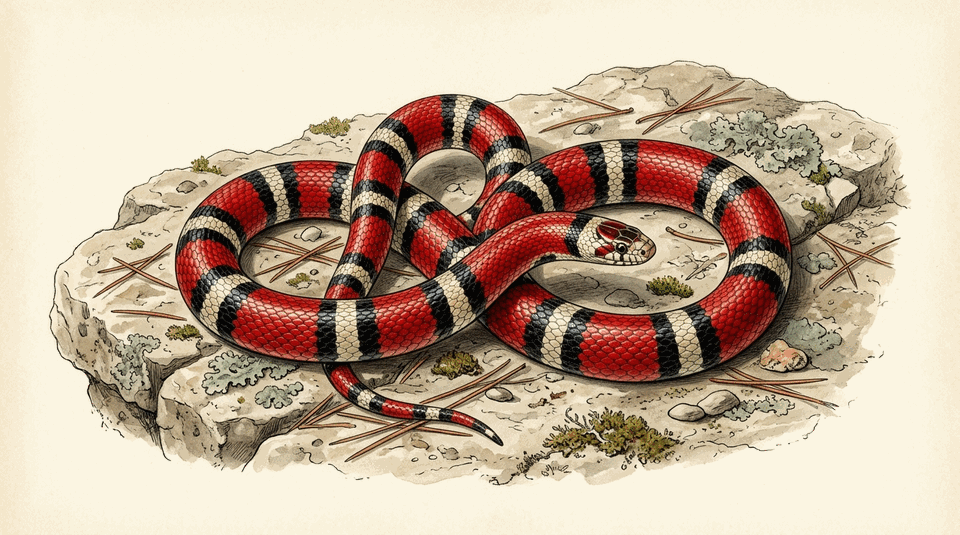
1. Escape-Proof Tank & Warm-to-Cool Setup
2. Two Great Ways to Set Up Your Habitat
Heating: Belly Heat Mat vs. Overhead Bulb
Milksnakes are secretive burrowers that digest fast when given a steady 85–88°F warm zone:
Option A: Under-Tank Heat Mat + Digital Thermostat (Our Top Pick)
Because Milksnakes spend most of the day tucked under flat caves, belly heat on a thermostat set to 86°F works like a charm.
Option B: 50W–75W Basking Bulb or Deep Heat Projector
Warms a flat rock and the air above it—great for 20-gallon and 40-gallon glass tanks.
Bedding: Shredded Aspen vs. Reptile Soil/Cypress
Give your Milksnake 3–4 inches of loose bedding to tunnel through:
Option A: Shredded Aspen Snake Bedding
Stays dry, holds tunnels well, and makes their bright red-black-white bands pop!
Option B: Reptile Soil or Cypress Mulch Mix
Awesome for naturalistic tanks and holding steady humidity in winter—pair with Powder Orange/Blue or Dalmatian (P. scaber) Isopods + Springtails for bioactive cleanup!
Lighting: Shade UVB vs. Simple LED
Since whole mice already supply 100% of their calcium and Vitamin D3, either lighting option works:
Option A: Low-Output Shade UVB (5%–7%)
Makes their crimson and cream rings glow and encourages dusk exploring.
Option B: Simple Day/Night Room or LED Light
Works great as long as they get a clear day/night cycle and pitch darkness at night.
3. Feeding Guide (Frozen/Thawed Mice)
Big Rules for Milksnake Keepers:
Kingsnakes & Milksnakes eat other snakes—100% solo!
Milksnakes love food and will eagerly charge dinner
Don't handle your snake right after touching mice
Leave them alone for 2 full days after every meal

4. Four Keys to a Happy, Thriving Kingsnake
Strictly One Per Tank!
All Kingsnakes and Milksnakes (Lampropeltis) are natural snake-eaters in the wild. Never put two snakes in the same tank or hold two snakes at the same time!
Clip That Screen Lid
They have strong, wedge-shaped noses built for prying under rocks—always use metal screen clips or locking front doors.
Blue Eyes = Shed Week
When their eyes turn cloudy blue, skip handling and mist their moss cave daily until the old skin rolls off in one clean piece.
Flat Cork Bark Trick
Lay 1 or 2 flat slabs of natural cork bark right on top of the bedding—Milksnakes love wedging themselves flat under bark even more than dome caves!

Bring-Home Shopping Checklist
Tap items to check them off on your phone while you shop at Critter Cabana.
Locking Tank & Bedding
Heating & Thermostat
Caves, Bowl & Mice
Complete Reference Notes & Oregon Keeping Guide
Species: Lampropeltis spp. (California, Mexican Black, Florida) | Difficulty: 2/5 — Easy | Hardiness: 5/5 — Bulletproof
Critter Cabana & Gresham Pet Supply — Keeping Your Pet Healthy & Thriving
At a Glance
| Common Name | Kingsnake (California, Mexican Black, Florida, Brooks) |
| Species | Lampropeltis californiae, L. nigrita, L. floridana |
| Origin | North & Central America (deserts, forests, grasslands) |
| Adult Size | 3–5 feet (Florida/Brooks can reach 6 feet) |
| Lifespan | 15–20+ years |
| Diet Type | Carnivore (Rodents) |
| Activity | Diurnal / Crepuscular (active during the day/evening) |
| Temperament | Docile, highly active, extremely food-motivated |
| Handleability | Excellent — very active and curious, less fearful than ball pythons |
| Habitat Type | Terrestrial / Semi-fossorial (burrowing) |
| Difficulty | 2/5 — Easy |
| Hardiness | 5/5 — Bulletproof |
Why We Love Them: Kingsnakes are the ultimate "pet rock" antidote. Unlike ball pythons that hide all day, kingsnakes are active, curious, and almost never refuse a meal. They get their "King" name because in the wild, they are immune to rattlesnake venom and regularly eat other snakes!

Housing & Enclosure
Enclosure Type & Size
- Type: Glass terrarium, PVC enclosure, or wooden vivarium
- Minimum: 48" x 24" x 24" (120 gallons) for an adult. Modern husbandry dictates they need room to stretch out fully.
- Recommended: 48" x 24" x 24" or larger.
- Lid: MUST have secure locks/clips. Kingsnakes are notorious escape artists and will test every corner of their enclosure.
- Enclosure Recommendations: Exo Terra Glass Terrarium 36x18x18 (for juveniles/sub-adults), transitioning to a 4x2x2 PVC enclosure.
Substrate
- Recommended: Aspen shavings (Zoo Med Aspen Snake Bedding) are the gold standard because they hold burrows beautifully and stay dry.
- Bioactive Option: Arid/scrub bioactive mixes (e.g., Terra Sahara or 70% topsoil / 30% playsand mix).
- Depth: 3–4 inches. Kingsnakes love to burrow and tunnel.
- Avoid: Pine or cedar shavings (toxic oils cause neurological and respiratory damage), Sand (impaction risk).
Décor & Enrichment
- Hides: Minimum of two snug-fitting hides (one on the warm side, one on the cool side). They prefer tight spaces where their bodies touch all sides.
- Climbing: Provide sturdy branches (cork bark, driftwood). They are excellent climbers and will actively use vertical space.
- Humid Hide: Provide a humid hide (a sealed plastic box with an access hole, filled with damp sphagnum moss) on the cool side to assist with shedding.
Temperature
Provide a clear thermal gradient so the snake can choose its temperature.
| Zone | Temperature |
|---|---|
| Basking Surface | 85–90°F (29–32°C) |
| Ambient Warm Side | 82–85°F (28–29°C) |
| Cool Side | 70–80°F (21–27°C) |
| Nighttime Drop | Can drop to 65–70°F safely |
Heating
- Primary: Overhead heating is best (Halogen flood bulb or Deep Heat Projector).
- Secondary: Under-tank heater (UTH) can be used for nighttime heat if the room gets very cold.
- CRITICAL: ALL heat sources MUST be connected to a thermostat to prevent severe burns.
- (cross-ref: Reptile/Amphibian Heating)
Humidity
- Target Range: 40–60% (ambient room humidity is usually fine).
- How to Maintain: Large water bowl. If humidity drops too low during shedding, mist the enclosure lightly or ensure the humid hide is damp.
- Avoid: Constant wet substrate, which leads to scale rot.
Lighting
- Photoperiod: 12 hours on / 12 hours off.
- UVB: Beneficial, though not strictly required for survival. Low-level UVB (5.0 or 6%) promotes natural basking behavior and better circadian rhythms.
- UVB Recommendations: Zoo Med ReptiSun T5 HO 5.0
Diet & Nutrition
Primary Diet
- Whole, frozen/thawed rodents (mice for most kingsnakes, small rats for large Florida kingsnakes).
Feeding Schedule
| Life Stage | Frequency | Prey Size |
|---|---|---|
| Hatchling / Juvenile | Every 5–7 days | Pinky or fuzzy mouse (slightly wider than snake's girth) |
| Sub-adult | Every 7–10 days | Hopper or adult mouse |
| Adult | Every 10–14 days | Large adult mouse or weaned rat |
Feeding Protocol
- Frozen/Thawed Only: Never feed live rodents, as they can severely injure or kill your snake. Thaw rodents in the fridge overnight, then warm them in warm water before offering.
- Food Motivation: Kingsnakes are incredibly food-motivated. Use feeding tongs (Zoo Med Stainless Steel Tongs) to avoid accidental bites to your fingers.
- The "Bite and Hold": Because they are so eager to eat, a kingsnake might occasionally mistake a finger for food. Wash hands thoroughly before handling to remove prey scent.
- Post-Feeding: Do not handle the snake for 48 hours after feeding to prevent regurgitation.
Water
- Provide a heavy water dish (they will tip light ones) large enough for the snake to soak its entire body. Change water every 2-3 days, or immediately if soiled.
Health & Husbandry
Common Health Issues
- Respiratory Infection (RI) — Symptoms: Wheezing, clicking sounds, open-mouth breathing, bubbles from nose/mouth, lethargy. / Cause: Temperatures too low or humidity too high/stagnant. / Prevention: Maintain proper heat gradient and ventilation. Requires vet care.
- Mites — Symptoms: Tiny black or red dots on the snake (especially around eyes/heat pits), snake soaking in water dish constantly, raised scales. / Cause: Parasites introduced from other reptiles or poor hygiene. / Prevention: Quarantine new reptiles, use preventatives like Provent-a-Mite on enclosures (never on the snake).
- Scale Rot — Symptoms: Brown, crusty, or blistered scales on the belly. / Cause: Sitting on wet, soiled substrate. / Prevention: Spot clean daily, ensure substrate is dry on the surface.
- Regurgitation — Symptoms: Expelling undigested prey. / Cause: Stress, handling too soon after eating, temperatures too low, or meal too large. / Protocol: DO NOT FEED for 14 days to allow stomach acids to replenish. Then feed a much smaller meal.
Shedding
- Signs of shedding ("in blue"): Eyes turn cloudy/blue, colors dull, skin looks wrinkled.
- Do not handle or feed while in blue.
- The shed should come off in one complete piece. If it is in patches (stuck shed), check your humidity and provide a damp moss hide.
Veterinary Needs
- Annual wellness checks with an exotic vet are recommended, along with a fecal test to check for internal parasites.
Color Morphs / Varieties
Kingsnakes have a massive variety of species, subspecies, and designer morphs.
California Kingsnake (Lampropeltis californiae)
- Normal (Banded): Alternating bands of black/brown and white/yellow.
- Striped: A single dorsal stripe running down the back instead of bands.
- Albino: Lack melanin (black pigment), resulting in stunning pink, yellow, and white snakes with red eyes.
- High White / Blizzard: Selectively bred for extreme amounts of white coloration.
Mexican Black Kingsnake / "MBK" (Lampropeltis nigrita)
- A distinct species famous for its stunning, glossy, solid jet-black coloration. Hatchlings may have small white spots under the chin that fade with age.
Florida Kingsnake (Lampropeltis floridana)
- Known for being robust and larger (up to 6 feet). Often feature a dark base with light speckling and crossbands.
- Brooks' Kingsnake: A variant from southern Florida with a high yellow/orange ground color and faded banding.
Handling Guidelines
- Hatchling Flightiness: Baby kingsnakes are notoriously fast, flighty, and may "musk" (release foul-smelling liquid from the cloaca) or rattle their tails when scared. This is normal defensive behavior.
- Taming: Regular, gentle handling (2-3 times a week for 10-15 minutes) will quickly tame them down. Adults are generally very docile and inquisitive.
- Hook Training: Because they are highly food-motivated, gently tapping them on the nose with a snake hook or paper towel roll before reaching in can break their "food response" and signal that it is handling time, not feeding time.
- Support: Support the snake's body with both hands and let it move through your fingers like a treadmill.
Compatibility
- Cohabitation: NEVER HOUSE KINGSNAKES TOGETHER. They are ophiophagous (snake-eating). They will almost certainly attempt to eat their cagemate, even if the cagemate is the same size or larger. Strictly one snake per enclosure.
Oregon & Local Keeping Notes
- Oregon: Legal to own. No special permits required for non-native kingsnakes. Note: Ensure you are not keeping locally protected native species without proper ODFW permits.
- General: Widely captive-bred and legal in most jurisdictions.
What We Stock & Use in Our Stores
These are products we carry and recommend for this species. Ask any associate for help finding them in-store.
| Category | Product | Notes |
|---|---|---|
| Enclosure | Exo Terra Glass Terrarium 36x18x18 | Minimum for sub-adults |
| Substrate | Zoo Med Aspen Snake Bedding | Holds burrows, stays dry |
| Heating | Zoo Med ReptiTherm UTH or ReptiCare Ceramic Heat Emitter | MUST be used with a thermostat |
| Thermostat | Zoo Med ReptiTemp Digital Thermostat | Prevents burns |
| Thermometer | Exo Terra Digital Thermometer with Probe | Place probe on basking spot |
| Hides | Exo Terra Reptile Cave (Medium/Large) | Need at least two |
| Water Dish | Exo Terra Water Dish (Large) | Heavy, prevents tipping |
| Feeding Tool | Zoo Med Stainless Steel Tongs (10") | Keeps fingers safe from eager eaters |
| Shedding Aid | Zoo Med Sphagnum Moss | Use inside a plastic hide box |
| Rodents | Arctic Mice (Frozen) | Ask staff for correct sizing |
Care sheet compiled by Critter Cabana & Gresham Pet Supply. For questions, ask any reptile specialist in-store.
Last updated: 2026-08-04
How We Keep Them at Critter Cabana & Gresham Pet Supply
- Beating Dry Oregon Furnace Air (and Summer Heat Spikes): Across the Willamette Valley and Portland Metro, running the house furnace all winter drops indoor humidity to 25–35%, which quickly causes stuck sheds and dehydration in screen-top tanks. To hold
40-60%reliably for Kingsnake, our crew uses a deep 3–5" substrate bed (or our store-shelf 10-Part Bioactive Mix of ReptiSoil, Coco Fiber, Orchiata Bark, Sphagnum Moss, and Leaf Litter), a dedicated humid hide packed with damp sphagnum moss, and partial screen cover when needed. - Thermostat & Linear UVB Standard: Every heating element in our Newberg and Gresham reptile rooms runs on a thermostat probe set to
85-90°Fon the warm side with a70-80°Fcool retreat, paired withbeneficialon a 12-hour day/night timer. In summer, if an upstairs room climbs above 82°F, a dimming thermostat automatically backs down the basking lamp so the cool side never overheats. - Stocked at Newberg & Gresham: We stock reptile enclosures, thermostats, Arcadia & Zoo Med UVB lighting, bioactive substrate ingredients, live Springtails, Dwarf White, Powder Blue/Orange, Dairy Cow, and Giant Canyon isopods, and gut-loaded crickets, dubia roaches, hornworms, and frozen-thawed rodents at Critter Cabana (Newberg) and Gresham Pet Supply.
Common Questions (FAQ)
What size tank does an adult Kingsnake actually need?
An adult Kingsnake needs at least 48x24x24 inches so you can maintain a true thermal gradient from 85-90°F on the warm/basking side down to 70-80°F on the cool side.
How do I keep Kingsnake humidity at 40-60% during dry Oregon winters?
Oregon winter furnace heat dries out thin bedding fast. Use a 3–5 inch moisture-retaining substrate mix (such as Zoo Med ReptiSoil blended with coco fiber, Orchiata bark, and sphagnum moss), provide an enclosed humid hide, and cover 50–70% of an open screen top with HVAC foil tape or a PVC panel if ambient humidity drops too low.
What is the best bioactive clean-up crew for a Kingsnake?
Pair Temperate White Springtails with a humidity-matched isopod species (such as Powder Blue/Orange for semi-arid setups or Dwarf White / Dairy Cow isopods for humid forest setups) in a 3–5 inch bioactive soil and leaf-litter bed. You can pick up our 1-Page or Tri-Fold Bioactive Substrate Recipe Guide and live cultures at Critter Cabana (Newberg) or Gresham Pet Supply.
Where can I get Kingsnake setup supplies, live feeders, and thermostats in Oregon?
We stock our full reptile, amphibian, and bioactive setup supplies—including enclosures, thermostats, Arcadia and Zoo Med UVB lighting, bioactive substrates, live isopods/springtails, and live or frozen feeders—at Critter Cabana in Newberg (514 E First St, 503-537-2887) and Gresham Pet Supply (2185 NW Burnside Rd, 503-665-7606).