Kenyan Sand Boa
Eryx colubrinus
1. Habitat Layout & Temperature Gradient
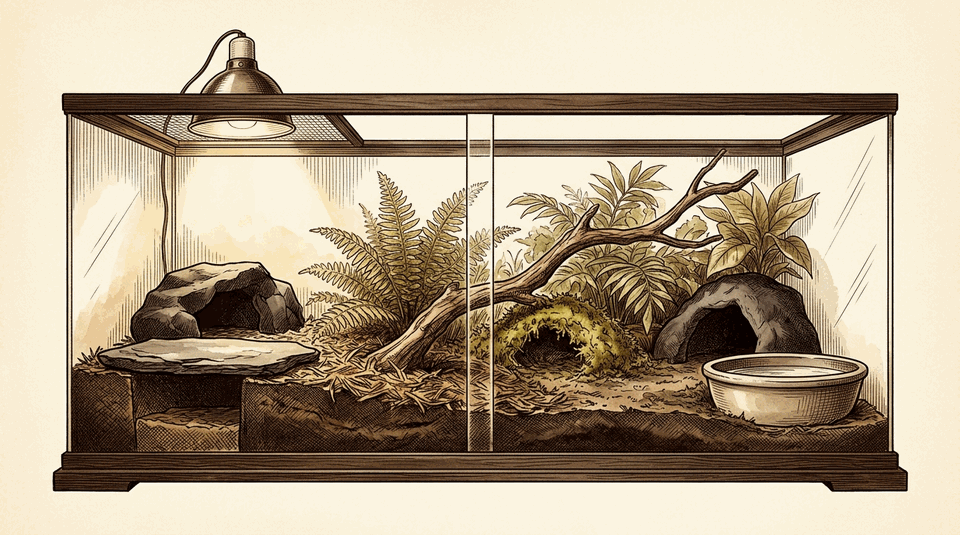
Species: Eryx colubrinus | Difficulty: 1/5 — Beginner | Hardiness: 4/5 — Hardy

Critter Cabana & Gresham Pet Supply — Keeping Your Pet Healthy & Thriving
At a Glance

| Common Name | Kenyan Sand Boa (KSB) |
| Species | Eryx colubrinus |
| Origin | East Africa (Kenya, Egypt, Sudan, Tanzania) in arid, sandy regions |
| Adult Size | Males: 15–20 inches (very small) / Females: 24–36 inches (heavy-bodied) |
| Lifespan | 15–30 years |
| Diet Type | Carnivore (Frozen/Thawed Mice) |
| Activity | Nocturnal / Crepuscular (active at night or dusk, mostly stays buried) |
| Temperament | Incredibly docile, slow-moving, and easy to handle. |
| Handleability | Excellent. They do not wrap around your arm like pythons; they prefer to simply rest in the palm of your hand. |
| Social Needs | Strictly solitary. Keep one per enclosure to avoid stress and cannibalism. |
| Difficulty | 1/5 — Beginner (One of the absolute easiest pet snakes available) |
| Hardiness | 4/5 — Hardy (Tolerates handling well and forgives minor temperature drops) |
Why We Love Them: The Kenyan Sand Boa is famous for its endearing, somewhat "derpy" appearance. Because they spend their lives burrowed in the sand and soil, their eyes are located almost on the very top of their head, allowing them to peek out from beneath the sand like a tiny crocodile waiting for prey. They are incredibly slow-moving, thick, and squishy, making them the perfect snake for people who are intimidated by fast-moving or large snakes.
Notable Morphs & Locales
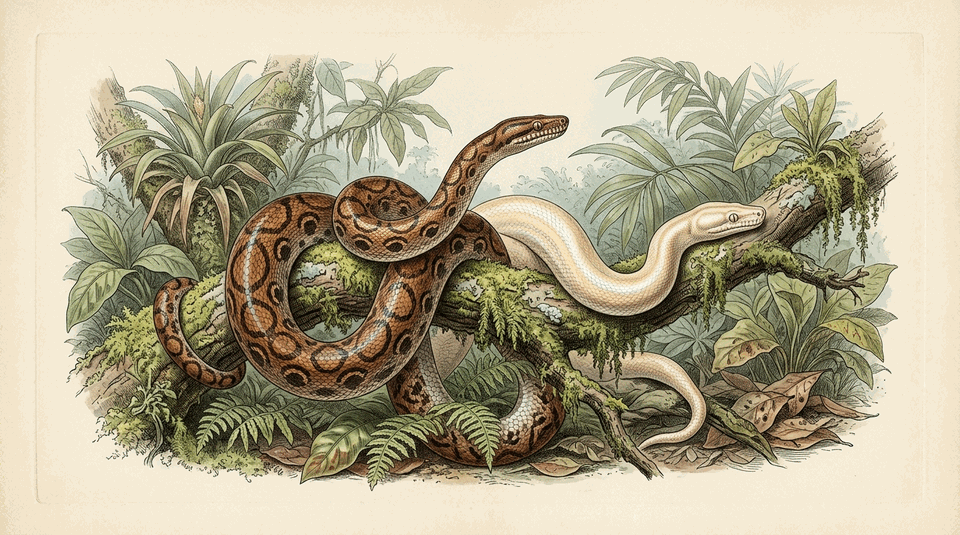
While the wild-type features a bright orange/yellow background with dark brown/black splotches, several beautiful morphs are popular in the hobby:
- Dodoma: A naturally occurring locale (from the Dodoma region of Tanzania) featuring high-contrast orange and black, often with a reduced or circular pattern rather than messy splotches.
- Albino: Lacks all dark melanin, resulting in a bright yellow, orange, and white snake.
- Anerythristic (Anery): Lacks red/yellow pigment, creating a high-contrast black, gray, and white snake (looks like a cookies-and-cream pattern).
- Snow: A combination of Albino and Anery, resulting in an almost completely white or pale pink snake.
- Paradox: A snake that randomly expresses patches of color that shouldn't be there (e.g., an Albino snake with random, distinct black spots).
Housing & Enclosure
Enclosure Size
Because of their extreme sexual dimorphism (females are massively larger than males), enclosure requirements differ based on sex:
- Males: A 20-gallon long terrarium (30"L x 12"W x 12"H) is perfect for an adult male.
- Females: A 40-gallon breeder terrarium (36"L x 18"W x 18"H) is required for adult females.
- Style: Glass terrarium with front-opening doors or a very secure screen lid. Warning: Sand Boas are incredibly strong for their size and will easily push open an unclipped screen lid while exploring the edges of the tank.
Enclosure Setup
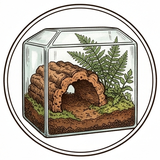
- Substrate: Deep substrate is the most important part of their care. They are fossorial (burrowing) snakes. Provide at least 3-4 inches of substrate. Aspen shavings, Zilla Desert Mix, or a mixture of organic topsoil and playsand work beautifully. Avoid pure calcium sand.
- Decor: They don't need climbing branches because they cannot climb well. Instead, provide ground clutter like cork bark flats, fake plants, and low, heavy hides that they can burrow underneath.
Humidity & Water
- Humidity: Low/Arid (30%–40%). Normal household humidity is usually perfect. High humidity will cause respiratory infections and blister disease.
- Humid Hide: During shedding, provide a small, enclosed hide filled with slightly damp sphagnum moss to help them shed their skin cleanly.
- Water Source: Provide a small, shallow water dish. If the dish is too large, the snake may spill it and ruin the dry substrate.
Temperature & Lighting
- Warm Side / Basking Spot: 90–95°F (32–35°C). Since they burrow, an under-tank heat mat (regulated by a thermostat) is often preferred, but an overhead halogen bulb also works well.
- Cool Side Ambient: 75–80°F (24–27°C).
- Lighting: Provide a standard daylight LED on a 12-hour cycle. While not strictly required for nocturnal snakes, low-level UVB (Zone 1) is beneficial.
Diet & Nutrition
Primary Diet
- Food Type: Frozen/Thawed mice. Never feed live rodents. Sand Boas are ambush predators; they will often strike from underneath the substrate and drag the mouse down.
- Prey Size: The mouse should be about the same thickness as the widest part of the snake's body. Adult males will eat "hoppers" or small adult mice, while adult females can eat large adult mice.
- Feeding Frequency:
- Juveniles: Every 5–7 days.
- Adult Males: Every 10–14 days.
- Adult Females: Every 7–10 days (they have faster metabolisms to support breeding weight).
Socialization & Behavior
Handling
- Taming: Sand Boas are incredibly easy to handle. They rarely strike out of anger. If they are scared, they typically try to slither backward or jerk away rather than bite.
- Support: Because they are not arboreal, they do not know how to wrap around your wrist to hold on. You must support their heavy bodies completely in the palm of your hand, or they will simply fall off.
- Post-Feeding: Do not handle for 48 hours after feeding to prevent regurgitation.
Health & Husbandry

Common Health Issues
- Scale Rot / Blister Disease — Symptoms: Brown, crusty, or blistered scales on the belly. / Cause: Sitting in wet, dirty substrate or high ambient humidity. / Treatment: Move to paper towels, lower humidity, and see a vet.
- Obesity — Symptoms: Folds of fat, scale separation showing skin underneath, lethargy. / Cause: Overfeeding (especially with males). / Prevention: Stick to a strict 14-day feeding schedule for adult males.
- Stuck Shed — Symptoms: Retained skin on the tail tip. / Cause: Lack of a humid microclimate when shedding. / Prevention: Provide a humid hide when the snake goes into "blue" (cloudy eyes).
What We Stock & Use in Our Stores
These are products we actively carry and recommend for Kenyan Sand Boa setups. Ask any associate for help finding them in-store.
| Category | Product | Notes |
|---|---|---|
| Enclosure (Males) | Exo Terra Natural Terrarium (Large/Low 36x18x18) | Perfect floor space for burrowing |
| Substrate | Zilla Snake & Lizard Litter (Aspen) | Holds tunnels extremely well and stays dry |
| Heating | Zilla Heat Mat + Zilla Terrarium Heat & Habitat Controller | CRITICAL: Always use a thermostat to prevent burns |
| Hides | Zilla Rock Lair | A fantastic, heavy humid hide for shedding |
| Lighting | Exo Terra Reptile UVB100 | Provides beneficial low-level UVB |
| Water Dish | Exo Terra Water Dish (Small or Medium) | Small enough to prevent spills |
| Water Treatment | Zoo Med ReptiSafe Water Conditioner | Removes chlorine from tap water |
Care sheet compiled by Critter Cabana & Gresham Pet Supply. For questions, ask any livestock specialist in-store.
Last updated: 2026-08-04
How We Keep Them at Critter Cabana & Gresham Pet Supply
- Beating Dry Oregon Furnace Air (and Summer Heat Spikes): Across the Willamette Valley and Portland Metro, running the house furnace all winter drops indoor humidity to 25–35%, which quickly causes stuck sheds and dehydration in screen-top tanks. To hold
balanced humidityreliably for Kenyan Sand Boa, our crew uses a deep 3–5" substrate bed (or our store-shelf 10-Part Bioactive Mix of ReptiSoil, Coco Fiber, Orchiata Bark, Sphagnum Moss, and Leaf Litter), a dedicated humid hide packed with damp sphagnum moss, and partial screen cover when needed. - Thermostat & Linear UVB Standard: Every heating element in our Newberg and Gresham reptile rooms runs on a thermostat probe set to
species-appropriate warm zoneon the warm side with acomfortable room temperaturecool retreat, paired withspecies-appropriate lightingon a 12-hour day/night timer. In summer, if an upstairs room climbs above 82°F, a dimming thermostat automatically backs down the basking lamp so the cool side never overheats. - Stocked at Newberg & Gresham: We stock reptile enclosures, thermostats, Arcadia & Zoo Med UVB lighting, bioactive substrate ingredients, live Springtails, Dwarf White, Powder Blue/Orange, Dairy Cow, and Giant Canyon isopods, and gut-loaded crickets, dubia roaches, hornworms, and frozen-thawed rodents at Critter Cabana (Newberg) and Gresham Pet Supply.
Common Questions (FAQ)
What size tank does an adult Kenyan Sand Boa actually need?
An adult Kenyan Sand Boa needs at least 30x12x12 inches (Males), 36x18x18 inches (Females) so you can maintain a true thermal gradient from species-appropriate warm zone on the warm/basking side down to comfortable room temperature on the cool side.
How do I keep Kenyan Sand Boa humidity at balanced humidity during dry Oregon winters?
Oregon winter furnace heat dries out thin bedding fast. Use a 3–5 inch moisture-retaining substrate mix (such as Zoo Med ReptiSoil blended with coco fiber, Orchiata bark, and sphagnum moss), provide an enclosed humid hide, and cover 50–70% of an open screen top with HVAC foil tape or a PVC panel if ambient humidity drops too low.
What is the best bioactive clean-up crew for a Kenyan Sand Boa?
Pair Temperate White Springtails with a humidity-matched isopod species (such as Powder Blue/Orange for semi-arid setups or Dwarf White / Dairy Cow isopods for humid forest setups) in a 3–5 inch bioactive soil and leaf-litter bed. You can pick up our 1-Page or Tri-Fold Bioactive Substrate Recipe Guide and live cultures at Critter Cabana (Newberg) or Gresham Pet Supply.
Where can I get Kenyan Sand Boa setup supplies, live feeders, and thermostats in Oregon?
We stock our full reptile, amphibian, and bioactive setup supplies—including enclosures, thermostats, Arcadia and Zoo Med UVB lighting, bioactive substrates, live isopods/springtails, and live or frozen feeders—at Critter Cabana in Newberg (514 E First St, 503-537-2887) and Gresham Pet Supply (2185 NW Burnside Rd, 503-665-7606).