
Isopods (Roly-Polys / Woodlice)
Various (Porcellio, Armadillidium, Trichorhina)
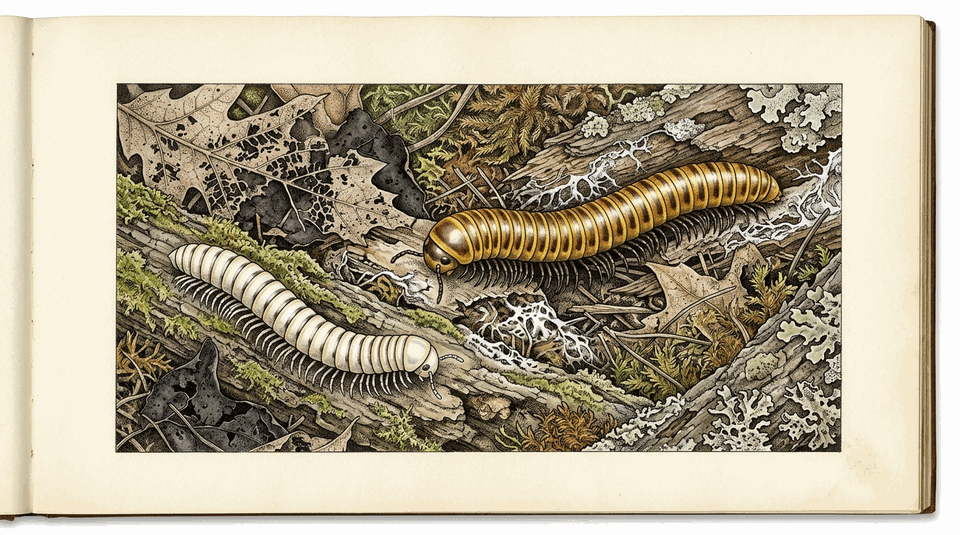
1. Building an Edible Forest-Floor Setup

2. Two Great Ways to Set Up Your Habitat
Forest Millipedes vs. Desert Millipedes
We carry both humid woodland types (Ivory, Bumblebee, Thai Rainbow) and desert cruisers (Texas Gold, Arizona Chocolate):
Option A: Forest Millipedes (Ivory, Bumblebee, Smokey Oak, Scarlet)
Keep the 5–6" soil and leaf bed damp like a wrung-out sponge from top to bottom, with 70–80% humidity.
Option B: Desert Millipedes (Texas Giant Gold, Desert Chocolate)
Keep the bottom 3" of soil damp so they can burrow down for moisture, but leave the top 2" and surface bark dry with good airflow!
What Goes in the Dirt? (Skip Plain Coco Coir!)
Big No-No: pure coconut fiber has zero nutrition and can clog up a millipede's gut if that's all they have to eat!
Option A: Ready-Made Bioactive Millipede & Isopod Soil
Use an organic millipede/isopod soil or peat-free reptile soil mixed heavy with crushed dead hardwood leaves and soft rotting wood.
Option B: Our DIY Forest-Floor Recipe
Mix 60% organic reptile/topsoil + 20% crushed dead oak/magnolia leaves + 20% soft, crumbly white-rotted hardwood + crushed cuttlebone.
Tankmates: Friends vs. Risky Roommates
Millipedes are super peaceful and love hanging out in groups:
Option A: Millipede + Dwarf White & Springtail Crew (Awesome!)
Keep several millipedes of similar moisture needs together, plus Tropical Springtails (and gentle Dwarf White Isopods if desired) to keep the tank clean and mold-free.
Option B: Don't Mix Big Hungry Isopods (Like Dairy Cows!)
Keep fast-breeding, protein-hungry Dairy Cow (P. laevis) or Porcellio scaber isopods in their own separate display tub (with 10% CaribSea Reptilite calcium sand!)—hungry large pods can nibble a soft molting millipede!
3. The Millipede Menu: Leaves, Wood & Veggie Treats
Millipede Favorites on Our Shelves:
Magnolia, Sea Grape, Jackfruit, Oak leaves
Soft crumbly hardwood they munch from inside out
Morning wood/detritivore gel & bee pollen
Crucial calcium for growing new leg segments!

4. Four Keys to a Happy, Thriving Isopods (Roly-Polys / Woodlice)
Leaves = Groceries!
If you can see bare dirt on top of the tank, add more dead leaves! A thick leaf blanket holds moisture in and is their favorite midnight snack.
Flat-Hand Handling
Let your millipede stroll across your flat palms right over a table—those 200+ tickly little feet feel amazing! If it curls into a spiral, set it gently back in its leaves.
Brown Stain Secretion
If spooked, millipedes can release a harmless liquid that smells like iodine and stains fingers brownish-yellow for a couple days. Just wash your hands with soap after handling!
Peel Grocery Veggies!
Grocery store cucumbers and squash often have invisible pesticide wax on the skin—always peel veggies or scrub them well before sharing with invertebrates!

Bring-Home Shopping Checklist
Tap items to check them off on your phone while you shop at Critter Cabana.
Tank & Edible Forest Bed
Moisture, Calcium & Cleanup
Treats & Supplements
Complete Reference Notes & Oregon Keeping Guide
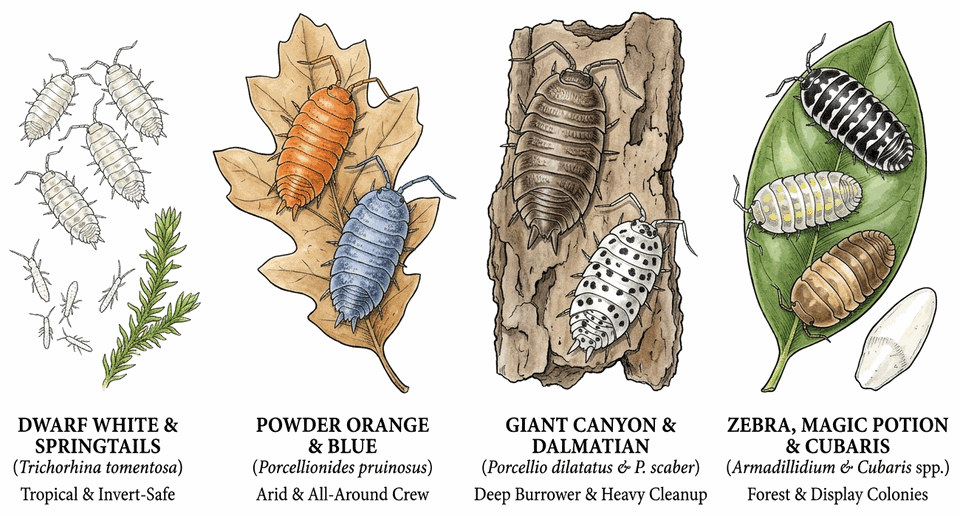
Species: Various (Dairy Cow, Powder Orange, Dwarf White, Zebra) | Difficulty: 1/5 — Beginner | Hardiness: 5/5 — Bulletproof
Critter Cabana & Gresham Pet Supply — Keeping Your Pet Healthy & Thriving
At a Glance
| Common Name | Isopods, Roly-Polys, Pillbugs, Woodlice (The Bioactive Clean-up Crew) |
| Species | Various (Porcellio, Armadillidium, Trichorhina) |
| Origin | Found worldwide under logs and leaf litter |
| Adult Size | 2mm (Dwarf Whites) up to 20mm (Dairy Cows) |
| Lifespan | Individuals live 1-3 years; colonies live indefinitely. |
| Diet Type | Detritivore (Eats leaf litter, decaying wood, feces, and protein) |
| Activity | Primarily nocturnal, though large species will forage during the day. |
| Temperament | Harmless. They do not bite or sting. |
| Venom | None |
| Difficulty | 1/5 — Beginner (Very easy to breed and maintain) |
| Hardiness | 5/5 — Bulletproof (As long as they have a moisture gradient) |
Why We Love Them: Isopods are the heavy-lifters of the bioactive terrarium. While springtails eat microscopic mold and fungus, isopods eat the big stuff: dead leaves, rotting wood, and your reptile's feces! They break waste down into rich fertilizer for your live plants. There are also hundreds of designer species (like "Dairy Cows" and "Zebra" isopods) that are beautiful and fun to keep as pets entirely on their own!
The Golden Rule of Isopods
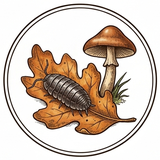
THE MOISTURE GRADIENT: Isopods breathe through modified gills. If they get too dry, they suffocate. If they get too wet, they drown. The absolute golden rule of keeping isopods is to provide a Moisture Gradient. One side of their enclosure must be damp (watered regularly), and the other side must be kept completely dry. This allows them to walk back and forth to regulate their own moisture needs perfectly.
The Big Three (Popular Bioactive Species)
- *Dairy Cow (Porcellio laevis):* Large (up to 3/4"), very active, surface-dwelling, and incredibly prolific. They look like tiny Holstein cows! They are protein-hungry and make fantastic cleaners for large reptiles (snakes, monitors, beardies).
- *Powder Orange / Blue (Porcellionides pruinosus):* Medium-sized, incredibly fast, and very forgiving. They are a staple for crested geckos, dart frogs, and tropical setups. They have a softer shell that makes them a great calcium-rich snack if your reptile accidentally eats them.
- *Dwarf White (Trichorhina tomentosa):* Tiny (2mm-4mm) and fossorial (they live underground). They are parthenogenetic, meaning the colony is 100% female and they clone themselves to reproduce! Because they are so small and hide underground, they are the perfect clean-up crew for delicate dart frogs that might otherwise eat larger isopods.
Culturing Isopods (How to breed them)
If you want to keep a "master culture" of isopods to continually harvest and seed multiple tanks, follow this setup:
Enclosure & Substrate
- Container: A 6-quart to 15-quart plastic "shoebox" bin. Drill small holes in the lid and sides for ventilation.
- Substrate: Mix organic topsoil, coconut fiber, and sphagnum moss. You want about 2 to 3 inches of depth.
- Leaf Litter (CRITICAL): Leaves are the primary food source for isopods. Cover the entire surface of the dirt with a thick layer of oak or magnolia leaf litter.
- Hides: Place a piece of cork bark on the dry side, and a piece of cork bark on the wet side.
Managing the Moisture Gradient
- Pour water directly onto the moss/dirt on exactly one half of the bin. Never spray the other half. When the wet side starts to dry out, pour a bit more water on it.
Diet & Nutrition (For Master Cultures)
In a bioactive terrarium, isopods will just eat reptile feces and leaf litter. However, in a master breeding culture, you need to supplement them to make the population explode.
- Base Diet: Leaf litter and decaying wood (Cork bark or rotted oak). They will eat this constantly.
- Protein Supplement: Once a week, drop in a pinch of fish flakes, dried shrimp, or Repashy Morning Wood. Dairy Cows, in particular, will swarm protein in minutes!
- Calcium Supplement: Isopods need calcium to build their shells. Always keep a piece of Cuttlebone or crushed eggshells in the bin for them to nibble on.
Seeding a Bioactive Terrarium
- Add Leaf Litter: Isopods will die in a bioactive tank if there is no leaf litter for them to eat and hide under.
- Wait to add your pet: Add your springtails and isopods to your terrarium 2 to 4 weeks before you add your reptile. This gives them time to burrow, find the damp spots, and establish a population before a giant lizard starts stomping on them.
- Pair with Springtails: Always use Isopods AND Springtails together. Isopods eat the big waste; springtails eat the microscopic mold. They do not compete and create a perfectly balanced ecosystem.
What We Stock & Use in Our Stores
These are products we carry and recommend for this species. Ask any associate for help finding them in-store.
| Category | Product | Notes |
|---|---|---|
| Clean-up Crew | Springtails | Always pair isopods with springtails! |
| Leaf Litter | Zoo Med Magnolia or Oak Leaves | 100% mandatory for their survival |
| Calcium | Zoo Med Cuttlebone | Drop a small piece in the culture so they can build their shells |
| Food | Repashy Morning Wood or Fish Flakes | Feed once a week to explode the population |
| Substrate | The Bio Dude Terra Flora / Terra Fauna | Excellent substrates that hold moisture gradients perfectly |
Care sheet compiled by Critter Cabana & Gresham Pet Supply. For questions, ask any livestock specialist in-store.
Last updated: 2026-08-04
How We Keep Them at Critter Cabana & Gresham Pet Supply
- Oregon Winter Furnace Air vs. Molting Humidity: When Pacific Northwest furnaces kick on from October through April, indoor room humidity drops fast and dries out small enclosures from the top down. Rather than misting the spider or invert directly (which stresses terrestrial species and invites stagnant mold), we keep Isopods (Roly-Polys / Woodlice) at
Moisture Gradient (One wet side, one dry side)by using a deep moisture-retaining substrate bed (ReptiSoil + Coco Fiber + Sphagnum Moss), overflowing the water dish slightly into one corner, and maintaining cross-ventilation. - Safe Room Heating in the Willamette Valley: If your house drops below 65°F on winter nights, never stick a heat pad on the bottom of a burrowing invertebrate tank—they dig down to escape heat and will cook themselves. Use a low-wattage side-mounted heat mat on a digital thermostat or warm the room ambiently to
species-appropriate warm zone. - Stocked at Newberg & Gresham: At Critter Cabana (Newberg) and Gresham Pet Supply, we stock acrylic and glass invertebrate enclosures, cork bark flats and tubes, bioactive substrates, flightless fruit flies (D. melanogaster and D. hydei), pinhead to adult crickets, dubia roaches, and live Temperate White Springtail and Isopod cultures.
Common Questions (FAQ)
How do I keep my Isopods (Roly-Polys / Woodlice) warm and humid enough during an Oregon winter?
Target species-appropriate warm zone and Moisture Gradient (One wet side, one dry side). When Oregon winter furnaces dry out the air, use a deep 3–5 inch substrate mix of Zoo Med ReptiSoil and coco fiber, keep a shallow water dish filled, and dampen one corner of the substrate rather than misting the animal directly. Never put a heat mat underneath a burrowing invertebrate enclosure.
What size enclosure does a Isopods (Roly-Polys / Woodlice) need?
An adult Isopods (Roly-Polys / Woodlice) thrives in 6-Quart Plastic Shoebox or Bioactive Terrarium with secure ventilation. For terrestrial tarantulas and scorpions, floor space and deep substrate matter most (keep open fall height low so heavy-bodied species cannot rupture their abdomen); for arboreal species, prioritize vertical cork bark tubes and cross-ventilation.
Can I put isopods in a Isopods (Roly-Polys / Woodlice) bioactive enclosure?
Around molting tarantulas and scorpions, skip protein-hungry large isopods and stick to Temperate White Springtails (or gentle Dwarf White isopods in humid detritivore setups) so a soft, newly molted animal is never nibbled.
Where can I find Isopods (Roly-Polys / Woodlice), cork bark, and feeder insects in Oregon?
We stock live invertebrates, tarantulas, jumping spiders, cork bark flats and tubes, bioactive substrates, and gut-loaded feeder insects at our two exotic animal stores: Critter Cabana in Newberg (514 E First St, 503-537-2887) and Gresham Pet Supply (2185 NW Burnside Rd, 503-665-7606).