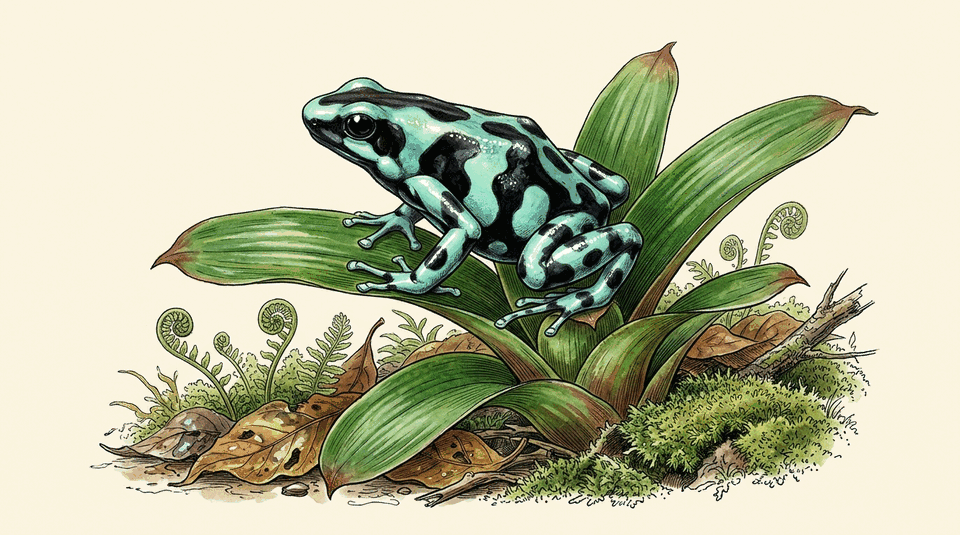
Green And Black Dart Frog
Dendrobates auratus & D. tinctorius
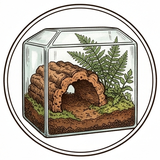
1. Building the 4-Layer Bioactive Jungle
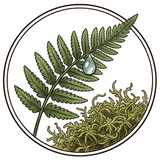
2. Two Great Ways to Set Up Your Habitat
Locking in 85% Humidity (Without Making Soup!)
The secret to Dart Frogs is keeping humidity at 85% while keeping the top leaves dry enough for their feet:
Option A: Covered Screen Top + Hand Misting (Our Top Pick!)
Cover 75–80% of the top mesh with a clear liner or glass panel—then a quick spray morning and evening keeps humidity locked right in.
Option B: Clay Drainage Layer Reservoir Underneath
A 2" base of Hydroballs / clay drainage balls under a mesh divider and Reptisoil wicks steady moisture into the air all week long!
Lighting: Plant LED vs. Shade UVB
Dart Frogs live on the shaded jungle floor, so your main light is actually for your live plants:
Option A: Full-Spectrum Vivarium Plant LED
Keeps live Bromeliads, Pothos, and moss thriving without heating up the glass box, while making your frogs' colors pop!
Option B: Plant LED + Low-Output Shade UVB
Adds gentle natural UV rays, though you still need to dust every single fly meal with calcium/vitamin powder.
Can They Live Together?
Unlike most reptiles, some Dart Frogs do great in pairs or small groups—if you match the right species:
Option A: Green-and-Black (Auratus) & Bumblebee (Leucomelas)
Super chill community frogs that usually get along great in groups of 2–4 of the same species.
Option B: Tinctorius ('Tincs' like Azureus / Cobalt)
Best kept solo or as a male/female pair once grown—adult female Tincs will wrestle each other over territory! Never mix different species in one tank.
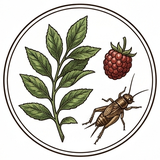
3. Feeding Guide: Flightless Fruit Flies & Springtails
Tiny Bugs & Supplements You'll Need:
Can't fly! (Melanogaster = small, Hydei = bigger)
Living cleanup crew + 24/7 snack bar
Fun occasional hunting variety
Dust every meal; add Vitamin A 2×/month

4. Four Keys to a Happy, Thriving Green And Black Dart Frog
Look, Don't Touch!
Frogs breathe and drink right through their skin, so oils and soap on human hands make them sick. If you ever need to move a frog, gently coax it into a clear plastic cup!
Wet Soil, Dry Leaf Carpet!
If frogs walk on sopping-wet mud all day, they get bacterial foot rot. Put a thick 2" blanket of curved Magnolia or Sea Grape leaves over the damp soil so their toes stay dry.
The 2-Week Fly Rule
A fruit fly culture takes 2 weeks to boom and crashes after ~4 weeks. Grab or start a fresh culture every 2 weeks so you never run out of flies on a Sunday night!
Escape-Proof the Vents
Flightless flies can't fly, but they love to walk! Put a strip of fine mesh or tape over any big cord slots so the flies stay inside with your frogs.

Bring-Home Shopping Checklist
Tap items to check them off on your phone while you shop at Critter Cabana.
Vivarium & 4-Layer Floor
Plants, Hides & Misting
Live Micro-Bugs & Dusts
Complete Reference Notes & Oregon Keeping Guide
common_name: "Green & Black Poison Dart Frog"
species_name: "Dendrobates auratus"
category: "amphibian"
difficulty: 2
hardiness: 3
diet_type: "insectivore"
adult_size: "1.5 inches"
lifespan: "10-15 years"
origin: "Central & South America"
temperament: "active, terrestrial & semi-arboreal"
nocturnal: false
social: "can be kept in groups"
min_enclosure: "18x18x18 inches"
last_updated: "2026-08-04"
author: "Critter Cabana & Gresham Pet Supply"
version: "1.0"
wiki_synced: false
Species: Dendrobates auratus | Difficulty: 2/5 — Easy (for a dart frog) | Hardiness: 3/5 — Moderate
Critter Cabana & Gresham Pet Supply — Keeping Your Pet Healthy & Thriving
At a Glance
| Common Name | Green & Black Poison Dart Frog |
| Species | Dendrobates auratus |
| Origin | Central and South America (Costa Rica, Panama, Colombia) |
| Adult Size | ~1.5 inches |
| Lifespan | 10–15 years (in captivity) |
| Diet Type | Insectivore (Micro-insects) |
| Activity | Diurnal (active during the day) |
| Temperament | Very active; they utilize both the floor and vertical climbing space. |
| Handleability | Strictly "Display Only" — DO NOT HANDLE |
| Social Needs | Highly social; can be kept in pairs, trios, or larger groups (10 gallons per frog minimum). |
| Difficulty | 2/5 — Easy (Excellent beginner dart frog) |
| Hardiness | 3/5 — Moderate (More forgiving than other dart frogs, but still requires precise humidity) |
Why We Love Them: Dendrobates auratus is widely considered one of the best "beginner" dart frogs. They are incredibly bold, active during the day, and come in stunning color variations. Unlike some dart frogs that fight, auratus do very well in groups!
THE TOXICITY MYTH: Captive-bred Poison Dart Frogs are completely harmless and non-toxic. In the wild, they sequester their toxins from eating specific alkaloid-rich ants and mites found only in the rainforest. In captivity, they eat fruit flies and do not develop any poison.

Notable Morphs & Locales
- Green & Black (Costa Rican, Panamanian): The classic, standard look featuring varying patterns of mint-green to deep forest-green over a jet black body.
- Super Blue: A stunning, highly sought-after morph featuring deep metallic blue patterns instead of green over a black body.
- Microspot / Fine Spot: A pattern mutation where the colored bands are broken up into tiny dots.
- Bronze / Campana: Features bronze or copper coloring mixed with the typical green/black.
Housing & Enclosure
Enclosure Size
- Minimum Enclosure: 18" x 18" x 18" for a pair or trio.
- Ideal Enclosure: 18" x 18" x 24" or 24" x 18" x 18".
- Style: Glass terrarium with front-opening doors. While they are mostly terrestrial, auratus climb much more than other dart frogs, so vertical space is highly appreciated.
Enclosure Setup (Bioactive is Best)
- Substrate: A proper drainage layer (hydroballs) separated by mesh, topped with 2-3 inches of ABG (Atlanta Botanical Gardens) mix or similar bioactive soil.
- Leaf Litter: CRITICAL. The entire floor of the enclosure must be covered in sterilized leaf litter (Live Oak, Magnolia, or Indian Almond leaves). Frogs live in and on the leaf litter; it prevents the soil from sticking to them and rotting their delicate skin.
- Decor & Hardscaping: Use cork bark tubes, ghost wood, and live plants (Pothos, Philodendrons, Bromeliads). Provide plenty of visual barriers so frogs can establish their own micro-territories.
Humidity & Water
- Humidity: Must be maintained very high, between 80%–100%.
- Misting: Hand mist with a spray bottle 1-2 times daily, or use an automatic misting/rain system. Ensure the tank never completely dries out.
- Water Source: Provide a very shallow water dish (they are poor swimmers and can drown in deep water).
- Water Quality: MUST use dechlorinated water, RO (Reverse Osmosis) water, or spring water. Tap water containing chlorine, chloramines, or heavy metals will absorb into their skin and kill them.
Temperature & Lighting
- Ideal Temperature: 70–80°F (21–27°C).
- Nighttime Drop: Can safely drop to 67–70°F (18–21°C).
- WARNING - HEAT SENSITIVITY: Temperatures consistently above 82°F (28°C) are highly stressful and often fatal. Heat lamps are almost never required unless the room is very cold.
- Lighting: Provide a full-spectrum LED plant light for live plant growth. Low-level UVB (Zone 1) is optional but recommended for D3 synthesis.
Diet & Nutrition
Primary Diet
- Micro-Insects: Dart frogs do not have teeth and have very small mouths. They eat Flightless Fruit Flies. Because auratus are slightly smaller than tinctorius, the smaller Drosophila melanogaster is ideal for froglets, though adults can take Drosophila hydei.
- Other Feeders: Pinhead crickets (1/8 inch), Springtails, and Dwarf White Isopods.
- Feeding Frequency: Feed adults every other day (about 20-30 flies per frog). Feed growing froglets daily.
Supplements (CRITICAL)
- Calcium & Vitamins: Dart frogs are extremely prone to Metabolic Bone Disease and Vitamin A deficiency. Every single feeding of fruit flies MUST be dusted with a high-quality, ultra-fine calcium and vitamin supplement.
- Recommended Brands: Repashy Calcium Plus is highly recommended.
- Vitamin A: A specific Vitamin A supplement (like Repashy Vitamin A Plus) should be used once or twice a month, as frogs cannot convert beta-carotene into Vitamin A efficiently.
Socialization & Behavior
Social Needs
- Dendrobates auratus are one of the most communal dart frogs in the hobby. They do excellently in groups, provided they are given enough space (about 10 gallons of space per frog).
- Provide plenty of visual barriers (plants and wood) so they can get away from each other if they choose.
Handling (DO NOT HANDLE)
- Handling: Dart frogs should never be handled unless absolutely necessary.
- Why? Their skin is incredibly thin, porous, and highly absorbent. The natural oils, salts, and any soap/lotion residues on human hands will absorb directly into their bloodstream and cause severe illness or death.
- If you MUST move them, coax them into a small plastic cup using a soft leaf, or wear powder-free, wet nitrile gloves.
Health & Husbandry
Common Health Issues
- Metabolic Bone Disease (MBD) — Symptoms: Jerky movements, unable to hop, seizing, rubbery jaw. / Cause: Lack of calcium and Vitamin D3 dusting on feeder insects. / Prevention: Strict adherence to dusting schedule.
- Short Tongue Syndrome — Symptoms: The frog strikes at a fruit fly, but the tongue doesn't stick. / Cause: Vitamin A deficiency. / Treatment: Requires immediate supplementation with pre-formed Vitamin A (Retinol).
- Red-Leg Syndrome (Bacterial Dermatosepticemia) — Symptoms: Redness on the belly and underside of the legs, lethargy. / Cause: Bacterial infection often triggered by stress, dirty conditions, or waterlogged substrate (soggy soil with no drainage). / Prevention: Keep leaf litter dry on top while soil below remains moist. Seek vet care immediately.
Signs of Illness
- Red Flag: Weight loss (visible hip bones or a sunken belly)
- Red Flag: Sitting in the water dish constantly (a sign of dehydration or parasites)
- Red Flag: Lethargy, dull coloring, or hiding constantly
- Red Flag: Spasms or twitching
What We Stock & Use in Our Stores
These are products we actively carry and recommend for Bioactive Dart Frog setups. Ask any associate for help finding them in-store.
| Category | Product | Notes |
|---|---|---|
| Enclosure | Exo Terra Natural Terrarium / Zilla Micro Habitat | Essential front-opening access |
| Substrate | Zilla Jungle Mix | High-quality base for bioactive soil |
| Moss/Moisture | Zilla Frog Moss or Exo Terra Forest Moss | Mix into substrate to retain humidity |
| Decor & Hides | Zilla Rock Lair / Exo Terra Caves | Rock Lair creates a perfect humid hide |
| Lighting | Exo Terra Compact Top / Zilla Pro Sol | Fixtures for plant grow bulbs and UVB |
| Humidity Control | Exo Terra Fogger or Rain System | Essential for tropical bioactive tanks |
| Water Treatment | Zoo Med ReptiSafe Water Conditioner | CRITICAL: Removes deadly chlorine from tap water |
Care sheet compiled by Critter Cabana & Gresham Pet Supply. For questions, ask any livestock specialist in-store.
Last updated: 2026-08-04
How We Keep Them at Critter Cabana & Gresham Pet Supply
- Beating Dry Oregon Furnace Air (and Summer Heat Spikes): Across the Willamette Valley and Portland Metro, running the house furnace all winter drops indoor humidity to 25–35%, which quickly causes stuck sheds and dehydration in screen-top tanks. To hold
balanced humidityreliably for Green And Black Dart Frog, our crew uses a deep 3–5" substrate bed (or our store-shelf 10-Part Bioactive Mix of ReptiSoil, Coco Fiber, Orchiata Bark, Sphagnum Moss, and Leaf Litter), a dedicated humid hide packed with damp sphagnum moss, and partial screen cover when needed. - Thermostat & Linear UVB Standard: Every heating element in our Newberg and Gresham reptile rooms runs on a thermostat probe set to
species-appropriate warm zoneon the warm side with acomfortable room temperaturecool retreat, paired withspecies-appropriate lightingon a 12-hour day/night timer. In summer, if an upstairs room climbs above 82°F, a dimming thermostat automatically backs down the basking lamp so the cool side never overheats. - Stocked at Newberg & Gresham: We stock reptile enclosures, thermostats, Arcadia & Zoo Med UVB lighting, bioactive substrate ingredients, live Springtails, Dwarf White, Powder Blue/Orange, Dairy Cow, and Giant Canyon isopods, and gut-loaded crickets, dubia roaches, hornworms, and frozen-thawed rodents at Critter Cabana (Newberg) and Gresham Pet Supply.
Common Questions (FAQ)
What size tank does an adult Green And Black Dart Frog actually need?
An adult Green And Black Dart Frog needs at least an appropriately sized enclosure so you can maintain a true thermal gradient from species-appropriate warm zone on the warm/basking side down to comfortable room temperature on the cool side.
How do I keep Green And Black Dart Frog humidity at balanced humidity during dry Oregon winters?
Oregon winter furnace heat dries out thin bedding fast. Use a 3–5 inch moisture-retaining substrate mix (such as Zoo Med ReptiSoil blended with coco fiber, Orchiata bark, and sphagnum moss), provide an enclosed humid hide, and cover 50–70% of an open screen top with HVAC foil tape or a PVC panel if ambient humidity drops too low.
What is the best bioactive clean-up crew for a Green And Black Dart Frog?
Pair Temperate White Springtails with a humidity-matched isopod species (such as Powder Blue/Orange for semi-arid setups or Dwarf White / Dairy Cow isopods for humid forest setups) in a 3–5 inch bioactive soil and leaf-litter bed. You can pick up our 1-Page or Tri-Fold Bioactive Substrate Recipe Guide and live cultures at Critter Cabana (Newberg) or Gresham Pet Supply.
Where can I get Green And Black Dart Frog setup supplies, live feeders, and thermostats in Oregon?
We stock our full reptile, amphibian, and bioactive setup supplies—including enclosures, thermostats, Arcadia and Zoo Med UVB lighting, bioactive substrates, live isopods/springtails, and live or frozen feeders—at Critter Cabana in Newberg (514 E First St, 503-537-2887) and Gresham Pet Supply (2185 NW Burnside Rd, 503-665-7606).