Ferret
Mustela putorius furo
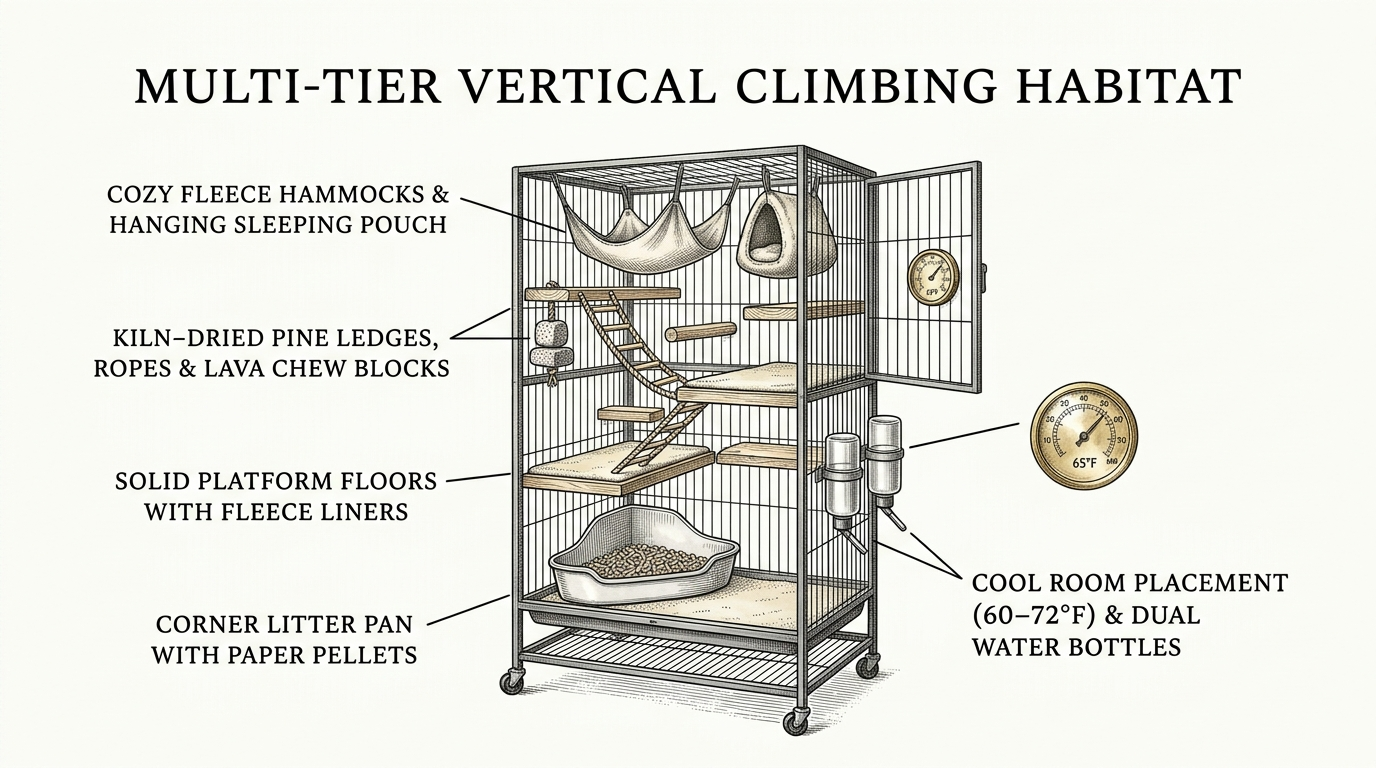
1. Multi-Tier Ferret Nation Cage, Hammocks & Lock-On Litter Pans

2. Two Great Ways to Set Up Your Habitat
Enclosure: Multi-Level Ferret Nation Cage + Fleece Hammock Canopy
Ferrets are denning carnivores, not rodents—they need sleeping hammocks and covered ramps, never wood shavings:
Option A: Midwest Ferret Nation Double-Unit Cage (Our Top Pick!)
Full-width double doors make daily litter scooping effortless, solid plastic pans protect feet, and fleece ramp covers prevent toes from catching.
Option B: Fleece Sleep Sacks, Comf-E-Cubes & Dark Hammocks
Ferrets need pitch-dark sleeping spots to support healthy melatonin levels (which helps protect against adrenal disease!). Wash their fleece weekly to cut down 'ferret musk' by 80%!
Litter Box Reality & The #1 Killer: Swallowed Rubber/Foam!
Critical Safety Law: Young ferrets love chewing squishy rubber and foam—which causes #1 emergency intestinal blockages!
Option A: Ferret-Proof Before Every Play Session
Pick up Crocs/foam shoes, rubber ear-buds, pencil erasers, latex dog toys, silikon bottle nipples, and check under reclining chairs and gap-toothed appliances!
Option B: High-Back Lock-On Litter Pan + Yesterday's News / Paper Pellets
Ferrets back into corners with their tail up! Clamp a high-back Marshall Lock-On pan in their favorite corner with unscented paper pellets (never clumping clay litter!).
Keeping a 'Business' (2+ Ferrets) & Nip-Training Kits
A group of ferrets is called a 'business'—and two ferrets tire each other out playing:
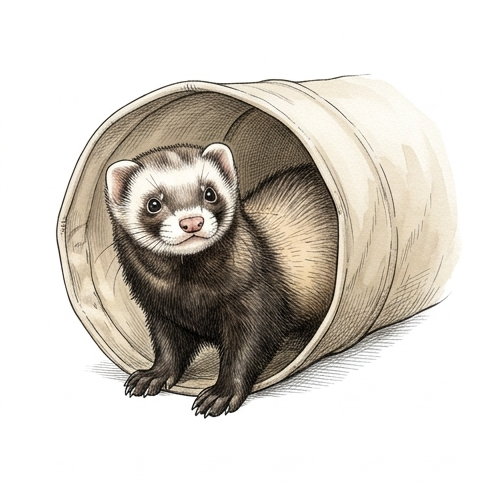
Option A: Pair of Bonded Ferrets + Tunnel Tubes
Two ferrets wrestle, chase each other through 10-foot clear Marshall Super Thru-Way tunnels, and curl up together in a single hammock.
Option B: Gentle Nip-Training for Young Kits
Ferrets have thick skin and play-nip each other! If a kit nips too hard, give a calm 'uh-uh' and a 2-minute time-out—never flick their nose.

3. Strict Obligate Carnivore Diet (38%+ Protein • 18%+ Fat • <4% Fiber)
Why Bathing a Ferret Makes Them Smell *Worse*:
Bathing strips skin oils and makes their scent glands work overtime!
90% of ferret odor is actually in their hammocks—wash weekly with unscented soap
1 raw/whisked egg yolk a week during spring/fall sheds helps prevent hairballs
Ferrets need annual Canine Distemper & Rabies vaccines from an exotic vet!

4. Four Keys to a Happy, Thriving Ferret
Check Recliner Chairs & Couches
Before sitting in a recliner or rocking chair, or closing a dishwasher/dryer door, always count every ferret—they love burrowing inside furniture cushions!
Easy Nail Trims with Salmon Oil
Put a dab of salmon oil on your ferret's belly while they sit in your lap—they'll lick their tummy blissfully while you clip all 20 nails in 60 seconds!
Never Let Food Run Empty
Because ferrets have an ultra-fast 3-hour digestive tract and high metabolism, going more than 4–6 hours without food causes dangerous low blood sugar.
Watch for Middle-Age Slowdown
In ferrets aged 3+, hind-leg weakness or staring into space can signal low blood sugar (insulinoma), and tail hair loss signals adrenal disease—both are very treatable by an exotic vet!

Bring-Home Shopping Checklist
Tap items to check them off on your phone while you shop at Critter Cabana.
Multi-Tier Cage & Hammocks
Obligate Carnivore Diet & Bowls
Tunnels, Grooming & Safety
Complete Reference Notes & Oregon Keeping Guide
Species: Mustela putorius furo | Difficulty: 3/5 — Intermediate | Hardiness: 3/5 — Moderate
Critter Cabana & Gresham Pet Supply — Keeping Your Pet Healthy & Thriving
At a Glance
| Common Name | Ferret |
| Species | Mustela putorius furo |
| Origin | Domesticated for over 2,500 years |
| Adult Size | 18 to 24 inches (including tail) |
| Lifespan | 5 to 9 years |
| Diet Type | Strict Obligate Carnivore (High protein, high fat) |
| Activity | Crepuscular (Will sleep 14-18 hours a day, but erupt with energy when awake) |
| Temperament | Incredibly playful, mischievous, and curious. They are known as the "clowns" of the pet world. |
| Handleability | Moderate. Young ferrets ("kits") are extremely nippy and require consistent bite inhibition training, much like a puppy. |
| Difficulty | 3/5 — Intermediate (High energy, escape artists, strict diet) |
| Hardiness | 3/5 — Moderate (Prone to adrenal disease, insulinoma, and heatstroke) |
Why We Love Them: Ferrets are essentially perpetual kittens. When they are awake, they bounce, do the famous "weasel war dance," and explore every nook and cranny of their environment. They are incredibly engaging, highly intelligent pets that form strong bonds with their owners.
The Diet Warning (CRITICAL)

OBLIGATE CARNIVORES: Ferrets cannot digest carbohydrates, fiber, or complex sugars. Feeding them fruits, vegetables, or sugary treats is incredibly dangerous. It will lead to a fatal disease called Insulinoma (cancer of the pancreas). Their diet must be strictly high-quality animal protein and fat.
Temperature & Heatstroke

NO SWEATING: Ferrets cannot tolerate heat. Temperatures above 80°F (26°C) are extremely dangerous and can cause fatal heatstroke. Keep them in a cool, air-conditioned room.
Housing & Enclosure
Cage Size & Setup
- Minimum Size: A large, multi-level wire cage (minimum 36" L x 24" W x 24" H). They need room to run, climb, and establish separate areas for sleeping, eating, and the litter box.
- Solid Bottoms: Wire floors will cause painful foot sores. Use solid plastic pans covered with blankets or fleece.
- Escape Artists: Ferrets are liquid. If their head fits, their body fits. Ensure the cage has very secure latches.
Enrichment & Litter Training
- Litter Box: Ferrets back into corners to use the bathroom. Provide a high-backed, triangular litter pan in the bottom corner of the cage. Use paper pellet litter (never clumping clay, which causes respiratory issues).
- Bedding: They love to tunnel and burrow. Provide multiple hanging hammocks, soft blankets, and sleeping sacks.
Diet & Nutrition
The Daily Diet Breakdown
- Premium Ferret Kibble: Provide constant access to a high-quality ferret kibble (minimum 30-40% crude protein and 15-20% fat). We recommend Wysong Epigen 90, Mazuri Ferret, or Marshall Premium. Avoid cheap grocery-store brands.
- Water: Provide a heavy ceramic bowl (they love to dig in their water) or a large water bottle.
Odor Management & Bathing
- Ferrets have a natural, musky scent. (Most pet store ferrets are descented, but the skin glands still produce oil).
- DO NOT OVER-BATHE: Bathing them strips their skin of oils, causing their glands to overproduce oil to compensate, which makes them smell worse. Bathe them only once every 3-4 months.
- The true secret to odor control: Wash their hammocks and blankets weekly, and clean the litter box daily.
Care & Maintenance
Out-of-Cage Time (Ferret-Proofing)
- Ferrets require at least 4 hours of out-of-cage playtime every day.
- You must "ferret-proof" the room. They will dig into the bottom of couches, climb into open recliners (which can crush them), and steal small shiny objects to stash under the bed. They will also chew on rubber and foam, causing fatal intestinal blockages.
What We Stock & Use in Our Stores
These are products we carry and recommend for this species. Ask any associate for help finding them in-store.
| Category | Product | Notes |
|---|---|---|
| Diet | Marshall Premium Ferret Diet | A staple, high-protein ferret kibble |
| Housing | MidWest Ferret Nation (Double Unit) | The absolute best ferret cage on the market |
| Litter | Fresh News Small Animal Paper Litter | Safe, dust-free paper pellets |
| Enrichment | Marshall Super Thru-Way | A massive, expandable tunnel they will love |
Care sheet compiled by Critter Cabana & Gresham Pet Supply. For questions, ask any livestock specialist in-store.
Last updated: 2026-08-04
How We Keep Them at Critter Cabana & Gresham Pet Supply
- Pacific Northwest Seasonal Drafts & Indoor Air Quality: In Oregon, damp chilly winters and sudden August heatwaves are the two biggest environmental stressors for Ferret. Keep their habitat (
36x24x24 Multi-Level Wire Cage) away from drafty windows, exterior doors, and direct furnace vents, and maintain a steady60-75°F (Prone to Heatstroke)temperature zone. - What Our Store Crew Uses Daily: In our Newberg and Gresham animal rooms, we use dust-extracted, scent-free bedding (never cedar or raw phenols), fresh Pacific Northwest grass hays or species-specific pelleted staples (Oxbow, Harrison's, Roudybush, or Higgins), and daily foraging enrichment so young animals are already hand-accustomed and eating a balanced diet before they go home with you.
- Local Exotic Vet Planning: Before an emergency ever happens, save the number of an experienced Oregon avian/exotic veterinarian in the Portland Metro or Willamette Valley area (such as Avian & Exotic Veterinary Care or Scales & Tails Exotic Pet Clinic).
Common Questions (FAQ)
What size cage or habitat does a Ferret actually need?
Plan on at least 36x24x24 Multi-Level Wire Cage as a true minimum—bigger horizontal floor space (or flight width for birds) is always better for daily exercise, mental health, and clean air quality.
How do I keep Ferret comfortable through Oregon winters and summers?
Keep indoor temperatures steady around 60-75°F (Prone to Heatstroke) with Moderate humidity, well away from cold window drafts in winter and direct afternoon sun in summer.
What do you feed Ferret at Critter Cabana and Gresham Pet Supply?
Our store crew feeds a balanced carnivore regimen built on high-quality pellets/hay and daily fresh produce or foraging items—never all-seed junk mixes that cause vitamin deficiencies and fatty liver disease.
Where can I meet Ferret and talk to the animal care crew in Oregon?
Visit our live animal departments at Critter Cabana in Newberg (514 E First St, 503-537-2887) or Gresham Pet Supply (2185 NW Burnside Rd, 503-665-7606) to meet our animals and get hands-on setup advice.