
Superworms
Zophobas morio
1. Habitat Layout & Temperature Gradient
Species: Zophobas morio (Darkling Beetle Larvae) | Care Difficulty: 1/5 | Breeding Difficulty: 3/5

Critter Cabana & Gresham Pet Supply — Keeping Your Pet Healthy & Thriving
At a Glance

| Common Name | Superworms, King Worms |
| Species | Zophobas morio |
| Primary Use | Staple Feeder (for larger reptiles) / Treat |
| Nutrition Profile | High fat, high protein. They have a tough exoskeleton (chitin) and a poor calcium-to-phosphorus ratio, so they must be dusted. |
| Lifespan | 4 to 6 months as larvae before they attempt to pupate. |
| Climbing Ability | No. They cannot climb smooth glass or plastic. |
| Flying Ability | No. The larvae cannot fly. The adult beetles have wings but rarely fly. |
| Care Difficulty | 1/5 — Beginner (Extremely easy as long as you keep them warm) |
| Breeding Difficulty | 3/5 — Intermediate (Requires isolating them individually to force pupation) |
Why We Love Them: Superworms are massive, highly active, and thrash around violently when dropped into a tank, making them incredible for triggering a feeding response in bearded dragons, monitors, and large geckos. They are essentially giant mealworms on steroids, but unlike mealworms, they are a tropical species and require different care.
The Golden Rule of Superworms
DO NOT REFRIGERATE THEM: This is the #1 mistake people make. People are used to putting standard mealworms in the fridge to stop them from turning into beetles. Superworms are a tropical species. If you put them in the refrigerator, they will die. Keep them at room temperature (70-80°F).
Nutrition & Gut-Loading

The Golden Rule of Feeders: An insect is only as nutritious as what it just ate. If you feed your reptile an empty insect, you are starving your reptile.
What is Gut-Loading?
Gut-loading is the process of feeding your insects a highly nutritious diet 24-48 hours before feeding them to your pet.
Best Gut-Loading Foods
- Base Bedding: They should live directly in their food. Wheat bran, rolled oats, or commercial insect bedding is perfect.
- Vegetables: Carrots, squash, sweet potatoes, and dark leafy greens (collard/mustard greens).
- Commercial Diets: Repashy Bug Burger or Mazuri Better Bug can be added for a massive nutrition boost.
Foods to Avoid
- Avoid: Dog/Cat food: Too high in animal protein; can cause fatal gout in reptiles.
- Avoid: Spinach / Kale: High in oxalates which bind calcium.
Hydration
- Water Source: Superworms get all their water from their food. Provide thick slices of carrots or potatoes.
- WARNING: Do not use water bowls or spray the enclosure. If their grain bedding gets wet, it will instantly mold and kill the entire colony.
Housing & Storage (Short Term)
If you are buying a cup or bag of superworms and keeping them alive to feed off over a few weeks:
Enclosure
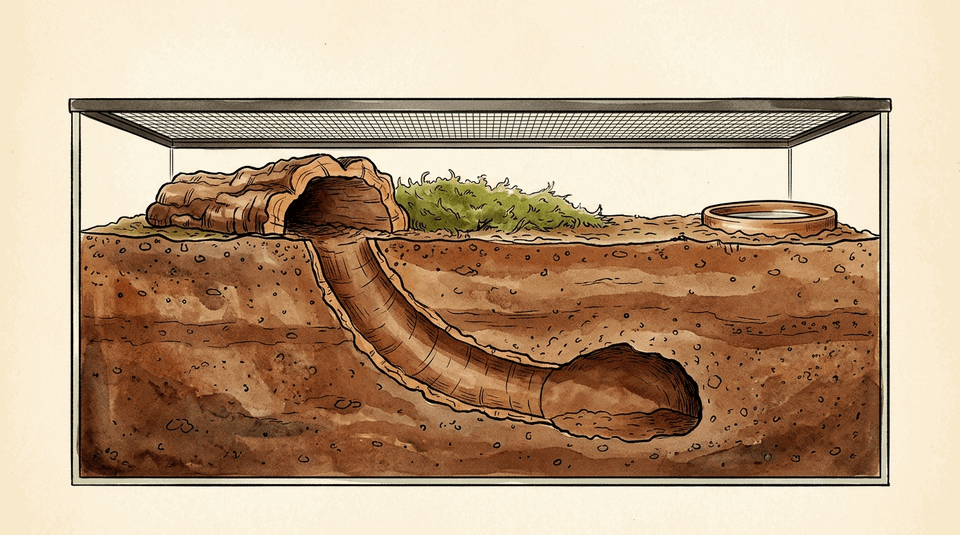
- Type: A plastic Kritter Keeper, storage tub, or simply the plastic deli cup they came in (if there are ventilation holes).
- Substrate: 1 to 2 inches of wheat bran or oatmeal. They will burrow into it and eat it constantly.
- Hides/Surface Area: None required, they prefer to be buried in their food.
Environment
- Temperature: Room temperature (70-80°F).
- Humidity: Keep them bone dry.
Culturing & Breeding (Long Term)
Breeding superworms requires a bit of science! Unlike mealworms, superworms will never pupate (turn into a cocoon) if they are touching other superworms. Their constant wiggling against each other prevents metamorphosis.
1. Forcing Pupation (The Isolation Phase)
- Select the largest, fattest worms.
- Place them individually into tiny, empty compartments (like a plastic bead organizer, a tackle box, or empty film canisters).
- Provide NO FOOD and NO WATER. Keep them completely in the dark at 80°F.
- After 1-2 weeks of curling into a "C" shape, they will shed their skin and turn into a white, alien-looking pupa.
2. The Beetle Colony
- After 2-3 weeks, a darkling beetle will emerge from the pupa. It will start white, turn red, and finally harden into black.
- Move the adult beetles into a large breeding bin with 2 inches of wheat bran and fresh vegetables.
- Keep them at 80-85°F. The beetles will mate and lay thousands of microscopic eggs in the bran.
3. Harvesting
- After 4 weeks, move the adult beetles to a completely new bin.
- Leave the old bin alone; within a month, you will see thousands of tiny superworms wriggling in the bran!
Maintenance & Cleaning
- Frass (Waste): Their waste looks like fine, grey sand. When the bedding stops looking like oats/bran and starts looking like dusty sand, it's time to sift the worms out and give them fresh bedding.
- Mold Prevention: Always remove uneaten vegetables after 48 hours before they rot.
What We Stock & Use in Our Stores
These are products we carry and recommend for this feeder. Ask any associate for help finding them in-store.
| Category | Product | Notes |
|---|---|---|
| Housing | Zilla / Exo Terra Critter Keeper | Smooth sides keep them contained |
| Bedding/Food | Fluker's High-Calcium Cricket Diet or Wheat Bran | Let them live directly in their food |
| Hydration | Fresh Carrots / Potatoes | Replaces the need for a water bowl |
| Supplements | Zoo Med Repti Calcium (Without D3) | Dust the worms before feeding to balance their poor Ca:P ratio |
Care sheet compiled by Critter Cabana & Gresham Pet Supply. For questions, ask any livestock specialist in-store.
Last updated: 2026-08-04
How We Keep Them at Critter Cabana & Gresham Pet Supply
- Oregon Winter Furnace Air vs. Molting Humidity: When Pacific Northwest furnaces kick on from October through April, indoor room humidity drops fast and dries out small enclosures from the top down. Rather than misting the spider or invert directly (which stresses terrestrial species and invites stagnant mold), we keep Superworms at
Low (Keep bedding dry)by using a deep moisture-retaining substrate bed (ReptiSoil + Coco Fiber + Sphagnum Moss), overflowing the water dish slightly into one corner, and maintaining cross-ventilation. - Safe Room Heating in the Willamette Valley: If your house drops below 65°F on winter nights, never stick a heat pad on the bottom of a burrowing invertebrate tank—they dig down to escape heat and will cook themselves. Use a low-wattage side-mounted heat mat on a digital thermostat or warm the room ambiently to
70-80°F (DO NOT REFRIGERATE). - Stocked at Newberg & Gresham: At Critter Cabana (Newberg) and Gresham Pet Supply, we stock acrylic and glass invertebrate enclosures, cork bark flats and tubes, bioactive substrates, flightless fruit flies (D. melanogaster and D. hydei), pinhead to adult crickets, dubia roaches, and live Temperate White Springtail and Isopod cultures.
Common Questions (FAQ)
How do I keep my Superworms warm and humid enough during an Oregon winter?
Target 70-80°F (DO NOT REFRIGERATE) and Low (Keep bedding dry). When Oregon winter furnaces dry out the air, use a deep 3–5 inch substrate mix of Zoo Med ReptiSoil and coco fiber, keep a shallow water dish filled, and dampen one corner of the substrate rather than misting the animal directly. Never put a heat mat underneath a burrowing invertebrate enclosure.
What size enclosure does a Superworms need?
An adult Superworms thrives in Plastic Bin / Kritter Keeper with secure ventilation. For terrestrial tarantulas and scorpions, floor space and deep substrate matter most (keep open fall height low so heavy-bodied species cannot rupture their abdomen); for arboreal species, prioritize vertical cork bark tubes and cross-ventilation.
Can I put isopods in a Superworms bioactive enclosure?
Around molting tarantulas and scorpions, skip protein-hungry large isopods and stick to Temperate White Springtails (or gentle Dwarf White isopods in humid detritivore setups) so a soft, newly molted animal is never nibbled.
Where can I find Superworms, cork bark, and feeder insects in Oregon?
We stock live invertebrates, tarantulas, jumping spiders, cork bark flats and tubes, bioactive substrates, and gut-loaded feeder insects at our two exotic animal stores: Critter Cabana in Newberg (514 E First St, 503-537-2887) and Gresham Pet Supply (2185 NW Burnside Rd, 503-665-7606).