
Dubia Roach
Blaptica dubia
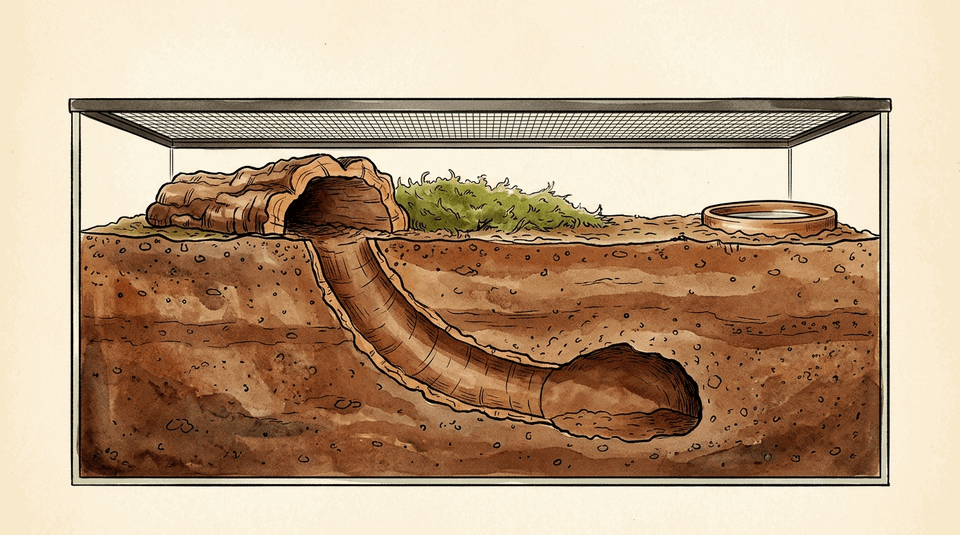
1. Habitat Layout & Temperature Gradient
Species: Blaptica dubia | Care Difficulty: 1/5 | Breeding Difficulty: 2/5

Critter Cabana & Gresham Pet Supply — Keeping Your Pet Healthy & Thriving
At a Glance

| Common Name | Dubia Roach, Orange-Spotted Roach |
| Species | Blaptica dubia |
| Primary Use | Premium Staple Feeder |
| Nutrition Profile | Extremely high protein, high meat-to-shell ratio, excellent calcium-to-phosphorus ratio. |
| Lifespan | 1 to 2 years |
| Climbing Ability | No. They cannot climb smooth glass or plastic. |
| Flying Ability | No. Adult males have wings but can only flutter-fall, not sustain flight. |
| Care Difficulty | 1/5 — Beginner |
| Breeding Difficulty | 2/5 — Easy (Requires supplemental heat) |
Why We Love Them: Dubia roaches are widely considered the absolute best feeder insect in the reptile hobby. They have more meat and less chitin (exoskeleton) than crickets, they don't smell, they make no noise, they can't jump, they can't climb smooth plastic, and they don't bite your pets. Once you switch to Dubias, you will never want to deal with crickets again!

Nutrition & Gut-Loading

The Golden Rule of Feeders: An insect is only as nutritious as what it just ate. If you feed your reptile an empty insect, you are starving your reptile.
What is Gut-Loading?
Gut-loading is the process of feeding your insects a highly nutritious diet 24-48 hours before feeding them to your pet. When your pet eats the roach, they digest the nutritious food inside the roach's stomach.
Best Gut-Loading Foods
- Commercial Diets: Repashy Bug Burger, Mazuri Better Bug, or high-quality Roach Chow.
- Vegetables: Squash, sweet potatoes, carrots.
- Dark Leafy Greens: Collard greens, mustard greens, dandelion greens.
Foods to Avoid
- Avoid: Dog/Cat food: Too high in animal protein and uric acid; can cause fatal gout in reptiles.
- Avoid: Spinach / Kale: High in oxalates which bind calcium and prevent reptiles from absorbing it.
- Avoid: Citrus: Can be toxic to certain reptiles (like bearded dragons) if gut-loaded into feeders.
Hydration
- Water Source: Use Water Crystals (polyacrylamide gel) or wet vegetables (carrots/squash).
- WARNING: Avoid open standing water. Dubia roaches, especially small nymphs, are incredibly clumsy and will drown in even a few millimeters of standing water.
Housing & Storage (Short Term)
If you are just keeping them alive for a few weeks to feed off:
Enclosure
- Type: A smooth-sided plastic storage tub or a glass aquarium. Because they can't climb smooth surfaces, you often don't even need a lid if the walls are tall enough (though a ventilated lid keeps out pests).
- Substrate: None. Do not use dirt or bedding. Keeping the floor bare plastic makes cleaning incredibly easy.
- Hides/Surface Area: Cardboard egg crates stacked vertically. Roaches need surface area to feel secure. Stacking them vertically ensures their frass (poop) falls to the floor.
Environment
- Temperature: Room temperature (70-75°F) is perfectly fine for simply keeping them alive. They will grow slowly and live a long time at this temperature.
- Humidity: Ambient room humidity is fine.
Culturing & Breeding (Long Term)
If you want to establish a self-sustaining colony to produce your own feeders:
The Breeding Setup
- Enclosure: A large, opaque plastic storage tote (they prefer the dark).
- Heating: Dubias require heat to breed. They need temperatures between 85°F and 95°F. Use a reptile heat pad attached to the bottom or side of the bin, connected to a thermostat.
- Ventilation: Drill holes in the lid or sides and hot-glue metal screen mesh over them. High heat without ventilation will cause condensation and mold, which will kill the colony.
Breeding Behavior
- Sexing: Extremely easy. Adult males have full wings that cover their entire back. Adult females have no wings (only tiny little stubs) and are wider and bulkier.
- Reproduction Method: Females are ovoviviparous. They create an egg case (ootheca), incubate it internally, and give birth to 20-30 live nymphs at a time.
- Ratios: Keep 1 male for every 3 to 5 females. Too many males will result in fighting and wing-biting.
Maintenance & Cleaning
- Frass (Waste): The floor of the bin will eventually fill up with dry, sandy "frass" (roach poop). Every 2-3 months, move the roaches and egg crates to a temporary bin and dump the frass. (Fun fact: Dubia frass is incredible fertilizer for houseplants!)
- Mold Prevention: The #1 killer of a roach colony is mold. Always remove uneaten fresh vegetables before they rot. Ensure your bin has adequate cross-ventilation.
What We Stock & Use in Our Stores
These are products we carry and recommend for this feeder. Ask any associate for help finding them in-store.
| Category | Product | Notes |
|---|---|---|
| Housing | Critter Keeper or 10-Gallon Tank | Smooth sides keep them contained |
| Gut-Load Food | Repashy Bug Burger / Morning Wood | The absolute gold standard for feeder nutrition |
| Hydration | Fluker's Cricket Quencher | Safe hydration without the drowning risk |
| Surface Area | Cardboard Egg Flats | Stack vertically! |
Care sheet compiled by Critter Cabana & Gresham Pet Supply. For questions, ask any livestock specialist in-store.
Last updated: 2026-08-04
How We Keep Them at Critter Cabana & Gresham Pet Supply
- Oregon Winter Furnace Air vs. Molting Humidity: When Pacific Northwest furnaces kick on from October through April, indoor room humidity drops fast and dries out small enclosures from the top down. Rather than misting the spider or invert directly (which stresses terrestrial species and invites stagnant mold), we keep Dubia Roach at
50-60%by using a deep moisture-retaining substrate bed (ReptiSoil + Coco Fiber + Sphagnum Moss), overflowing the water dish slightly into one corner, and maintaining cross-ventilation. - Safe Room Heating in the Willamette Valley: If your house drops below 65°F on winter nights, never stick a heat pad on the bottom of a burrowing invertebrate tank—they dig down to escape heat and will cook themselves. Use a low-wattage side-mounted heat mat on a digital thermostat or warm the room ambiently to
80-95°F for breeding. - Stocked at Newberg & Gresham: At Critter Cabana (Newberg) and Gresham Pet Supply, we stock acrylic and glass invertebrate enclosures, cork bark flats and tubes, bioactive substrates, flightless fruit flies (D. melanogaster and D. hydei), pinhead to adult crickets, dubia roaches, and live Temperate White Springtail and Isopod cultures.
Common Questions (FAQ)
How do I keep my Dubia Roach warm and humid enough during an Oregon winter?
Target 80-95°F for breeding and 50-60%. When Oregon winter furnaces dry out the air, use a deep 3–5 inch substrate mix of Zoo Med ReptiSoil and coco fiber, keep a shallow water dish filled, and dampen one corner of the substrate rather than misting the animal directly. Never put a heat mat underneath a burrowing invertebrate enclosure.
What size enclosure does a Dubia Roach need?
An adult Dubia Roach thrives in Plastic Bin / Storage Tote with secure ventilation. For terrestrial tarantulas and scorpions, floor space and deep substrate matter most (keep open fall height low so heavy-bodied species cannot rupture their abdomen); for arboreal species, prioritize vertical cork bark tubes and cross-ventilation.
Can I put isopods in a Dubia Roach bioactive enclosure?
Around molting tarantulas and scorpions, skip protein-hungry large isopods and stick to Temperate White Springtails (or gentle Dwarf White isopods in humid detritivore setups) so a soft, newly molted animal is never nibbled.
Where can I find Dubia Roach, cork bark, and feeder insects in Oregon?
We stock live invertebrates, tarantulas, jumping spiders, cork bark flats and tubes, bioactive substrates, and gut-loaded feeder insects at our two exotic animal stores: Critter Cabana in Newberg (514 E First St, 503-537-2887) and Gresham Pet Supply (2185 NW Burnside Rd, 503-665-7606).