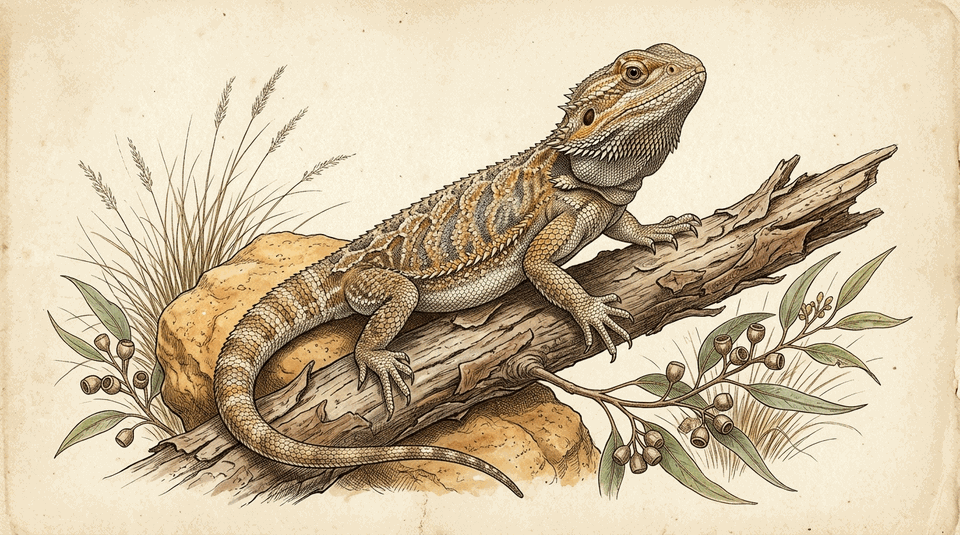
Bearded Dragon
Pogona vitticeps
1. Sunbeam Basking & Tank Setup
2. Two Great Ways to Set Up Your Habitat
Flooring: Easy-Clean Tile vs. Digging Mix
Once your basking spot is a true 100–108°F, healthy dragons do great on either setup:
Option A: Textured Slate Tile or Non-Adhesive Mat
Wipes clean in seconds, keeps their claws trimmed naturally, and is our go-to recommendation for babies under 6 months.
Option B: 70/30 Reptisoil & Fine Reptisand Mix
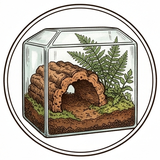
For healthy older juveniles and adults, 4–5" of packed Reptisoil + fine quartz sand lets them dig happily (never use calcium sand!). For bioactive cleanup, add our Powder Orange/Blue (P. pruinosus) or Dalmatian / Spanish Orange (P. scaber) Isopods + Springtails under a damp cork flat!
UVB Lighting: Why We Always Use a Long T5 HO Bar
Skip screw-in coil UVB bulbs—they don't reach far enough for a Bearded Dragon! Use a linear T5 HO hood right on the screen:
Option A: 12%–14% / 10.0 T5 HO Bar on Top of Screen (Our Top Pick!)
Screen mesh blocks ~30% of UV light, so a strong 12%–14% or 10.0 T5 HO fixture resting on the screen 10–12" above the basking branch is ideal.
Option B: Overlap Your T5 UVB Hood & Basking Dome!
Set your T5 UVB bar and 100W–150W halogen basking dome side-by-side on the warm end so your dragon gets heat and UV in the exact same sunbeam.
Keeping Them Hydrated
Many dragons ignore standing water bowls because they're wired to drink raindrops off plants:
Option A: Mist Their Morning Collard Greens + Offer Hornworms
Spraying their daily greens with water (and treating them to a juicy hornworm) sneaks water right in with breakfast.
Option B: Dripping Water on the Snout or Warm Soaks
Drip water gently on the tip of their nose until they lick, or offer a 10-minute warm belly-deep bath during big sheds.
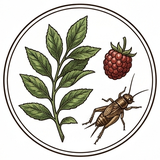
3. The Diet Flip: Bugs for Babies → Greens for Adults
What Goes in the Salad Bowl & Bug Dish:
Collard, dandelion, mustard, turnip greens, endive
Dubia roaches, crickets, Calci-Grubs (BSFL)
Grated butternut squash, bell pepper, flower toppers
Skip fruit (rots teeth!); NEVER feed avocado or fireflies!

4. Four Keys to a Happy, Thriving Bearded Dragon
Swap UVB Bulbs Yearly
UVB tubes stop making invisible UV rays long before the light burns out! Mark your calendar to swap the T5 bulb every 10–12 months to prevent soft bones (MBD).
Winter 'Brumation' Naps
When winter hits, adult dragons often get sleepy and hide for weeks. Don't panic—that's brumation! Just have a vet check a poop sample first to make sure parasites aren't the culprit.
Waving & Head-Bobbing
Little slow arm-waves mean 'I'm friendly / you're the boss!' Fast head-bobbing and a black beard mean they're feeling feisty. Always house dragons 100% solo.
2-Hour Digestion Rule
Make sure you feed at least 2 hours before the lights click off at night—they need that 105°F basking heat to digest dinner!

Bring-Home Shopping Checklist
Tap items to check them off on your phone while you shop at Critter Cabana.
Enclosure & Decor
Sunbeam Heating & T5 UVB
Greens, Bugs & Supplements
Complete Reference Notes & Oregon Keeping Guide
Species: Pogona vitticeps | Difficulty: 2/5 — Easy | Hardiness: 4/5 — Hardy
Critter Cabana & Gresham Pet Supply — Keeping Your Pet Healthy & Thriving
At a Glance
| Common Name | Central Bearded Dragon |
| Species | Pogona vitticeps |
| Origin | Central Australia (deserts, arid scrublands) |
| Adult Size | 18–24 inches (including tail) |
| Lifespan | 10–15 years |
| Diet Type | Omnivore (Insects + Leafy Greens) |
| Activity | Diurnal (active during the day) |
| Temperament | Docile, highly interactive, tolerant of handling |
| Handleability | Excellent — one of the best pet reptiles for handling |
| Habitat Type | Terrestrial / Semi-arboreal (they love to bask on elevated surfaces) |
| Difficulty | 2/5 — Easy |
| Hardiness | 4/5 — Hardy |
Why We Love Them: Bearded dragons are the "golden retrievers" of the reptile world. They are highly interactive, often recognize their owners, and will gladly sit on your shoulder while you watch TV. While they require a bit more setup than a snake (due to UVB and daily fresh salads), their engaging personalities make them incredibly rewarding.
Housing & Enclosure
Enclosure Type & Size
- Type: PVC, sealed wood, or glass front-opening terrarium. PVC or wood is preferred as it holds heat much better than glass.
- Minimum: 48" x 24" x 24" (120 gallons) for a single adult. This is the modern bare-minimum standard to allow for proper temperature gradients and exercise.
- Recommended: 48" x 24" x 24" or larger.
- Lid: Secure screen lid to allow for maximum ventilation and light penetration.
- Enclosure Recommendations: Exo Terra Glass Terrarium 36x18x18 (for juveniles only), transitioning to a 4x2x2 PVC enclosure by 8-10 months of age.
Substrate
- Recommended (Solid): Slate tile (naturally files their nails), newspaper, or paper towels.
- Recommended (Loose): A safe arid mix like Zoo Med ReptiSand mixed with organic topsoil, or bioactive Terra Sahara.
- Avoid: Calcium sand (encourages eating the sand, causing lethal impaction), Wood chips, Crushed walnut shells.
Décor & Enrichment
- Basking Spot: A wide, flat rock or thick piece of driftwood placed directly under the heat lamp. Slate rocks are excellent for absorbing and radiating belly heat.
- Hides: Minimum of two hides (warm side and cool side) large enough for the dragon to completely conceal itself.
- Climbing: Sturdy branches or hammocks. They love to survey their territory from a high vantage point.
Temperature
Bearded dragons come from the harsh Australian outback and require intense heat to digest their food.
| Zone | Temperature |
|---|---|
| Basking Surface | 100–115°F (38–46°C) |
| Ambient Warm Side | 85–90°F (29–32°C) |
| Cool Side | 70–85°F (21–29°C) |
| Nighttime Drop | 65–75°F (18–24°C) |
Heating
- Primary: Overhead Halogen flood bulb (e.g., Zoo Med Repti Basking Spot Lamp) to provide intense, bright heat.
- Nighttime: Only necessary if your house drops below 65°F. Use a Ceramic Heat Emitter (CHE) which provides heat without light. NEVER use red or blue "night bulbs" as they disrupt the dragon's sleep.
- CRITICAL: Use a digital thermometer with a probe or an infrared temp gun to measure the actual basking surface temperature, not just the air temperature.
- (cross-ref: Reptile/Amphibian Heating)
Humidity
- Target Range: 30–50% (typical household humidity is fine).
- How to Maintain: Ensure adequate ventilation. If humidity is too high, it can cause respiratory infections.
Lighting (CRITICAL: UVB)
- Photoperiod: 12-14 hours on / 10-12 hours off.
- UVB: ABSOLUTELY REQUIRED. Without UVB, a bearded dragon will rapidly develop fatal Metabolic Bone Disease (MBD).
- Type: You MUST use a linear T5 HO (High Output) tube that spans 2/3 the length of the enclosure. Do not use compact coil bulbs, as they do not provide a wide enough spread of UVB.
- Placement: Position the UVB tube to overlap with the basking light so the dragon gets heat and UVB simultaneously.
- Replacement: UVB tubes stop producing UVB long before they burn out visually. Replace the bulb every 6-12 months.
- UVB Recommendations: Zoo Med ReptiSun T5 HO 10.0 or 14.0 (Ferguson Zone 3-4).
Diet & Nutrition
Bearded dragons are omnivores. Their diet shifts dramatically from insect-heavy (as growing babies) to salad-heavy (as adults).
Feeding Schedule
| Life Stage | Insects | Leafy Greens |
|---|---|---|
| Baby (< 6 mos) | 70-80% of diet. Feed 2-3 times daily (as many as they eat in 10 mins). | 20-30% of diet. Offer fresh daily. |
| Juvenile (6-12 mos) | 50% of diet. Feed once daily. | 50% of diet. Offer fresh daily. |
| Adult (12+ mos) | 20-30% of diet. Feed insects 2-3 times per WEEK. | 70-80% of diet. Offer fresh daily. |
Prey Items & Salads
- Staple Insects: Dubia roaches, crickets, black soldier fly larvae (Nutrigrubs), silkworms.
- Treat Insects (High Fat/Chitin): Hornworms (great for hydration), mealworms, superworms, waxworms.
- Staple Greens (Daily): Collard greens, mustard greens, turnip greens, dandelion greens, endive, escarole.
- Occasional Veggies: Butternut squash, bell peppers, carrots.
- Avoid: Iceberg lettuce (zero nutrition, causes diarrhea), Spinach/Beet Greens (binds calcium), Avocado/Rhubarb (toxic), Fireflies (highly toxic/fatal).
- Size Rule: Never feed insects larger than the space between the dragon's eyes to prevent impaction.
Supplements
| Supplement | Schedule |
|---|---|
| Calcium (without D3) | Dust insects 3-4x weekly (if using T5 UVB) |
| Calcium (with D3) | Dust insects 1x weekly |
| Multivitamin | Dust insects 1-2x weekly |
- Supplement Recommendations: Zoo Med Repti Calcium and Zoo Med Reptivite. (cross-ref: Reptile/Amphibian Supplements)
Water
- Provide a shallow water dish. Many dragons do not recognize standing water; you can drip water on their snout to encourage drinking, or offer a 15-minute lukewarm bath once a week.
Health & Husbandry

Common Health Issues
- Metabolic Bone Disease (MBD) — Symptoms: Soft/rubbery jaw, kinked tail, tremors, dragging hind legs, lethargy. / Cause: Lack of UVB lighting or calcium. / Prevention: Use a T5 HO 10.0 UVB tube, replace every 6-12 months, and supplement calcium. Requires immediate vet care.
- Impaction — Symptoms: Lack of bowel movements, bloated belly, lethargy, paralyzed hind legs. / Cause: Swallowing loose substrate (calcium sand) or eating prey that is too large, combined with basking temperatures that are too low to digest food properly. Emergency vet care required.
- Yellow Fungus (CANV) — Symptoms: Yellow, crusty, necrotic patches on the skin/scales. / Cause: Highly contagious fungal infection often stemming from poor hygiene or contact with infected animals. / Prevention: Quarantine new animals, maintain strict hygiene. Requires aggressive veterinary treatment.
- Adenovirus (Atadenovirus / "Stargazing") — Symptoms: Failure to thrive, extreme lethargy, looking straight up at the ceiling ("stargazing"), wasting away. / Cause: Highly contagious viral infection. / Prevention: Quarantine. No cure; requires supportive vet care.
Shedding
- Bearded dragons shed in patches (unlike snakes).
- Never peel pulling or stuck shed, as it can damage the scales underneath.
- Provide a lukewarm soak or use Zoo Med Repti Shedding Aid if a patch is stubbornly stuck (especially around toes and tail tip to prevent circulation loss).
Veterinary Needs
- Annual wellness checks with an exotic vet and a fecal test to check for internal parasites (coccidia and pinworms are common).
Morphs & Varieties
Note: True morphs are genetic scale or pigment mutations. Words like "Citrus," "Blood Red," or "Sunburst" just describe the color selectively bred into the dragon.
Scale/Texture Morphs
- Leatherback: Reduced scale size and lacks spikes down the back, resulting in a smoother appearance and often brighter colors. (Dominant gene)
- Silkback ("Silkie"): Completely scaleless. Requires extreme specialized care, as they lack protective scales, are highly prone to UV burns, and have difficulty shedding. We do not recommend breeding Silkbacks.
- Dunner: Irregular, chaotic scale patterns that point in all directions, especially notable on the chin and tail.
Pigment/Pattern Morphs
- Hypomelanistic (Hypo): Reduced dark pigmentation, resulting in pastel/lighter colors. Identified by their clear (translucent) fingernails lacking the normal black stripe.
- Translucent (Trans): Scales appear slightly clear/gummy. As babies, they often have blue bellies. They typically feature solid black "alien" eyes.
- Zero: A completely patternless, color-free dragon resulting in a stunning silvery-white animal.
Handling Guidelines
- Support: Always support all four legs and the tail. Do not grab them from above, as their "parietal eye" (a photoreceptor on top of their head) detects overhead shadows like birds of prey.
- Reading Body Language:
- Black Beard: Extreme stress, anger, or feeling unwell.
- Head Bobbing: Territorial display or dominance (fast bobbing). Slow bobbing can be submission.
- Arm Waving: A sign of submission ("I'm just a baby, don't eat me!").
- Gaping (Mouth Open): Normal thermoregulation! Like a dog panting, they open their mouths to vent excess heat while basking.
Compatibility
- Cohabitation: Strictly solitary. Bearded dragons are highly territorial. Housing them together routinely results in missing toes, missing tails, or death. Do not cohabitate.
Oregon & Local Keeping Notes
- Oregon: Legal to own. No special permits required.
- General: Widely captive-bred and legal in almost all jurisdictions. Australia banned the export of native wildlife in the 1960s, so all pet bearded dragons today are descended from lines established decades ago.
What We Stock & Use in Our Stores
These are products we carry and recommend for this species. Ask any associate for help finding them in-store.
| Category | Product | Notes |
|---|---|---|
| Enclosure | Exo Terra Glass Terrarium 36x18x18 | For juveniles; transition to 4x2x2 |
| Substrate | Zoo Med ReptiSand (mixed with topsoil) or Tile | NO Calcium Sand |
| Heating | Zoo Med Repti Basking Spot Lamp | Use high wattage to reach 105°F+ |
| Thermostat | Zoo Med ReptiTemp Digital Thermostat | Prevents overheating/fires |
| Thermometer | Exo Terra Infrared Temp Gun | Critical for measuring surface temp |
| UVB Lighting | Zoo Med ReptiSun T5 HO 10.0 Terrarium Hood | ABSOLUTELY REQUIRED (Linear tube) |
| Supplements | Zoo Med Repti Calcium | Dust insects |
| Hides | Exo Terra Reptile Cave (Large) | Need warm and cool options |
| Basking Spot | Zoo Med Cork Bark or Slate Rock | Absorbs heat well |
| Feeder Insects | Dubia Roaches, Crickets, Hornworms | Size no larger than space between eyes |
Care sheet compiled by Critter Cabana & Gresham Pet Supply. For questions, ask any reptile specialist in-store.
Last updated: 2026-08-04
How We Keep Them at Critter Cabana & Gresham Pet Supply
- Beating Dry Oregon Furnace Air (and Summer Heat Spikes): Across the Willamette Valley and Portland Metro, running the house furnace all winter drops indoor humidity to 25–35%, which quickly causes stuck sheds and dehydration in screen-top tanks. To hold
30-50%reliably for Bearded Dragon, our crew uses a deep 3–5" substrate bed (or our store-shelf 10-Part Bioactive Mix of ReptiSoil, Coco Fiber, Orchiata Bark, Sphagnum Moss, and Leaf Litter), a dedicated humid hide packed with damp sphagnum moss, and partial screen cover when needed. - Thermostat & Linear UVB Standard: Every heating element in our Newberg and Gresham reptile rooms runs on a thermostat probe set to
100-115°Fon the warm side with a70-85°Fcool retreat, paired withrequiredon a 12-hour day/night timer. In summer, if an upstairs room climbs above 82°F, a dimming thermostat automatically backs down the basking lamp so the cool side never overheats. - Stocked at Newberg & Gresham: We stock reptile enclosures, thermostats, Arcadia & Zoo Med UVB lighting, bioactive substrate ingredients, live Springtails, Dwarf White, Powder Blue/Orange, Dairy Cow, and Giant Canyon isopods, and gut-loaded crickets, dubia roaches, hornworms, and frozen-thawed rodents at Critter Cabana (Newberg) and Gresham Pet Supply.
Common Questions (FAQ)
What size tank does an adult Bearded Dragon actually need?
An adult Bearded Dragon needs at least 48x24x24 inches so you can maintain a true thermal gradient from 100-115°F on the warm/basking side down to 70-85°F on the cool side.
How do I keep Bearded Dragon humidity at 30-50% during dry Oregon winters?
Oregon winter furnace heat dries out thin bedding fast. Use a 3–5 inch moisture-retaining substrate mix (such as Zoo Med ReptiSoil blended with coco fiber, Orchiata bark, and sphagnum moss), provide an enclosed humid hide, and cover 50–70% of an open screen top with HVAC foil tape or a PVC panel if ambient humidity drops too low.
What is the best bioactive clean-up crew for a Bearded Dragon?
Pair Temperate White Springtails with a humidity-matched isopod species (such as Powder Blue/Orange for semi-arid setups or Dwarf White / Dairy Cow isopods for humid forest setups) in a 3–5 inch bioactive soil and leaf-litter bed. You can pick up our 1-Page or Tri-Fold Bioactive Substrate Recipe Guide and live cultures at Critter Cabana (Newberg) or Gresham Pet Supply.
Where can I get Bearded Dragon setup supplies, live feeders, and thermostats in Oregon?
We stock our full reptile, amphibian, and bioactive setup supplies—including enclosures, thermostats, Arcadia and Zoo Med UVB lighting, bioactive substrates, live isopods/springtails, and live or frozen feeders—at Critter Cabana in Newberg (514 E First St, 503-537-2887) and Gresham Pet Supply (2185 NW Burnside Rd, 503-665-7606).